
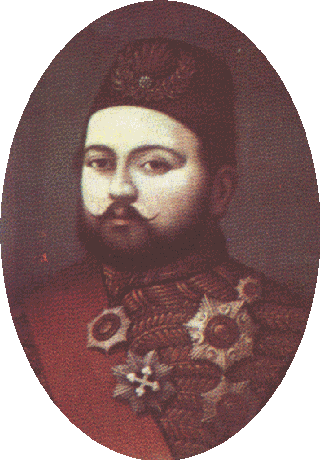
Abbas I of Egypt
Abbas I of Egypt was a Wāli of Egypt from 1848 to 1854. Born July 1, 1812, in Jeddah. Died July 13, 1854, in Benha. Positions held include Beylerbey of Egypt and wali (1849–1854).
Facts
11 facts · 2 confirmed by two sources · 1 cited · 8 from one source
What’s different
- Born: we show July 1, 1812 (Confirmed). Wikidata also lists 1813
Where this comes from
Papalocal keeps its own record. It started from these sources; what each one said is kept here as it was copied, so a change on their side never changes this page by itself. Tap one to read its version.
What Wikidata says · copied November 16, 2026 · revision 2567428101
- Described as
- Wāli of Egypt from 1848 to 1854
- Other names
- Abbas I Pasha, Abbas of Egypt, Abbas Egypt, Abbas I (pasha of Egypt), Abbas Hilmi I, Abbas Helmy I of Egypt
- Born
- July 1, 1812; 1813 · 2 references
- Died
- July 13, 1854 · 1 reference
- Born in
- Jeddah
- Died in
- Benha
- Citizen of
- Egypt eyalet
- Occupation
- politician; monarch
- Positions held
- Beylerbey of Egypt; wali (1849–1854) · 1 reference
- Children
- Damad Prince Ibrahim Ilhamy Pasha
- Father
- Tusun Pasha
- Wikipedias with a page
- 41
Wikidata item Q305882 (wikidata.org/wiki/Q305882), public domain (CC0). Copied November 16, 2026.
What Wikipedia says · copied November 16, 2026 · revision 1381411241
Abbas Helmy I of Egypt (also known as Abbas Pasha, Arabic: عباس الأول, Turkish: I. Abbas Hilmi Paşa; 1 July 1812–13 July 1854) was the wāli of Egypt during 1848–1854. He was a son of Tusun Pasha, the younger son of Muhammad Ali Pasha whom he succeeded as de facto ruler of Egypt and Sudan.
The Chambers Biographical Dictionary says of him: "[b]igoted and sensual, he did much to undo the progress made under Muhammad Ali."
- Born, in its opening lines
- July 1, 1812
- Died, in its opening lines
- July 13, 1854
From the Wikipedia article “Abbas I of Egypt” (en.wikipedia.org/wiki/Abbas_I_of_Egypt), by its contributors, under CC BY-SA 4.0 (creativecommons.org/licenses/by-sa/4.0/). Copied November 16, 2026; not changed.
Confirmed Two sources agree. Cited One source, and it names where it got it. One source One source, without a reference of its own. Sources disagree The sources disagree. We show the best-supported value and keep theirs below.
