
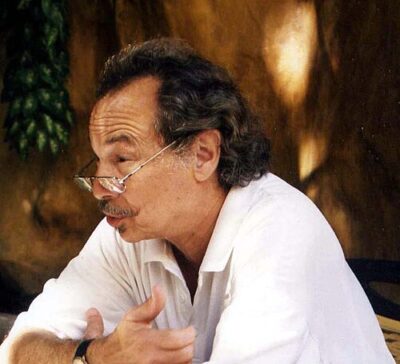
Abdelmajid Lakhal
Abdelmajid Lakhal was a Tunisian theatre director and actor. Born November 29, 1939, in Bizerte. Died September 27, 2014, in Tunis. Known for The Messiah, Fatma 75 and Jesus of Nazareth.
Facts
16 facts · 2 confirmed by two sources · 1 cited · 13 from one source
Where this comes from
Papalocal keeps its own record. It started from these sources; what each one said is kept here as it was copied, so a change on their side never changes this page by itself. Tap one to read its version.
What Wikidata says · copied November 17, 2026 · revision 2543112848
- Described as
- Tunisian theatre director and actor (1939-2014)
- Born
- November 29, 1939
- Died
- September 27, 2014 · 1 reference
- Born in
- Bizerte
- Died in
- Tunis · 1 reference
- Buried in
- Jebel Boukornine
- Citizen of
- French protectorate of Tunisia (–1956); Tunisia (1956–)
- Occupation
- actor; theatre director; stage actor
- Known for
- The Messiah (1975); Fatma 75 (1976); Jesus of Nazareth (1977); Le baruffe chiozzotte (2000); The Seagull (2005); Day of the Falcon (2011)
- Wikipedias with a page
- 26
Wikidata item Q2043799 (wikidata.org/wiki/Q2043799), public domain (CC0). Copied November 17, 2026.
What Wikipedia says · copied November 17, 2026 · revision 1382093208
Abdelmajid Lakhal (November 29, 1939 – September 27, 2014) was a Tunisian theatre and film actor and theatre director. He was considered to be a professional and versatile interpreter. Recently, he performed classical pieces (Carlo Goldoni, Anton Chekhov) translated into Arabic, at the Municipal theatre of Tunis, which were well received.
He was known on Arab Television for acting in many telefilms.
- Born, in its opening lines
- November 29, 1939
- Died, in its opening lines
- September 27, 2014
From the Wikipedia article “Abdelmajid Lakhal” (en.wikipedia.org/wiki/Abdelmajid_Lakhal), by its contributors, under CC BY-SA 4.0 (creativecommons.org/licenses/by-sa/4.0/). Copied November 17, 2026; not changed.
Confirmed Two sources agree. Cited One source, and it names where it got it. One source One source, without a reference of its own. Sources disagree The sources disagree. We show the best-supported value and keep theirs below.
