
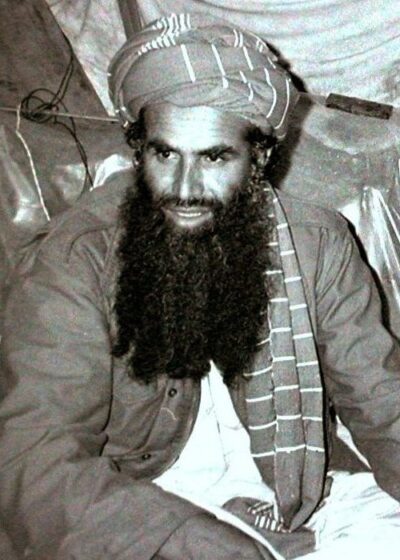
Abdul Rasul Sayyaf
Abdul Rasul Sayyaf is an Afghan mujahideen commander and politician. Born 1946, in Paghman. Positions held include Member of the House of the People of Afghanistan. Educated at Kabul University and Al-Azhar University. Awards include King Faisal Prize in Service to Islam.
Facts
13 facts · 0 confirmed by two sources · 0 cited · 12 from one source · 1 where the sources disagree
What’s different
- Name at birth: we show عبدالرب رسول سياف (Sources disagree). Wikidata also lists Ustad Abdul Rab Rasul Sayyaf
Where this comes from
Papalocal keeps its own record. It started from these sources; what each one said is kept here as it was copied, so a change on their side never changes this page by itself. Tap one to read its version.
What Wikidata says · copied November 18, 2026 · revision 2538113451
- Described as
- Afghan mujahideen commander and politician (born 1946)
- Other names
- Abdulrab Rasul Sayyaf, Ustad Abdul Rab Rasul Sayyaf
- Born
- 1946
- Born in
- Paghman
- Name at birth
- عبدالرب رسول سياف; Ustad Abdul Rab Rasul Sayyaf
- Citizen of
- Afghanistan
- Occupation
- politician; mujahid; partisan
- Positions held
- Member of the House of the People of Afghanistan
- Political party
- Islamic Dawah Organisation of Afghanistan
- Education
- Kabul University; Al-Azhar University · 1 reference
- Awards
- King Faisal Prize in Service to Islam (1985)
- Religion
- Islam
- Wikipedias with a page
- 21
Wikidata item Q545955 (wikidata.org/wiki/Q545955), public domain (CC0). Copied November 18, 2026.
What Wikipedia says · copied November 18, 2026 · revision 1375651020
Abdulrab Rasul Sayyaf (born 1946) is an Afghan Pashtun politician and former military commander. He took part in the war against the Marxist–Leninist People's Democratic Party of Afghanistan (PDPA) government in the 1980s, leading the Afghan mujahideen faction Ittehad-al-Islami (Islamic Union).
Compared to other Afghan mujahideen leaders, Sayyaf was closely tied with international mujahideen from the Arab world. During the Soviet-Afghan War he had close relations with Saudi Arabia and helped mobilize Arab jihadist volunteers for the mujahideen forces.
Sayyaf was allied with the Rabbani government in the 1990s. After the rise of the Taliban militia, he joined the Northern Alliance in opposition of the Taliban, despite his close relationship with Saudi Arabia that supported the Taliban. In 2005 after the creation of the Islamic Republic of Afghanistan, Sayyaf's Islamic Union was converted into a political party and he was elected as a member of the Afghan Parliament, where he maintained political influence. Following the Taliban capture of Kabul in 2021, Sayyaf fled to exile in New Delhi, India.
From the Wikipedia article “Abdulrab Rasul Sayyaf” (en.wikipedia.org/wiki/Abdulrab_Rasul_Sayyaf), by its contributors, under CC BY-SA 4.0 (creativecommons.org/licenses/by-sa/4.0/). Copied November 18, 2026; not changed.
Confirmed Two sources agree. Cited One source, and it names where it got it. One source One source, without a reference of its own. Sources disagree The sources disagree. We show the best-supported value and keep theirs below.
