
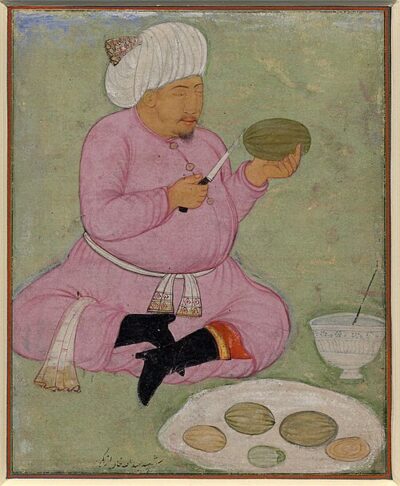
Abdullah Khan II
Abdullah Khan II was a Shaybanid Khan of Bukhara from 1583 to 1598. Born 1533, in Khanate of Bukhara. Died February 4, 1598, in Samarkand. Positions held include khan (1553–1598).
Facts
10 facts · 0 confirmed by two sources · 1 cited · 9 from one source
Where this comes from
Papalocal keeps its own record. It started from these sources; what each one said is kept here as it was copied, so a change on their side never changes this page by itself. Tap one to read its version.
What Wikidata says · copied November 17, 2026 · revision 2564810042
- Described as
- Shaybanid Khan of Bukhara from 1583 to 1598
- Other names
- Abdullah Khan, Abdullah ibn Iskandar, Abul Ghazi Abdullah ibn Iskandar, Abdullah Khan Uzbek II, 'Abdullah Khan Uzbek II, ʿAbd Allāh Khan II, Abd Allāh Khan II
- Born
- 1533 · 2 references
- Died
- February 4, 1598 · 1 reference
- Born in
- Khanate of Bukhara
- Died in
- Samarkand
- Occupation
- poet; khan
- Positions held
- khan (1553–1598)
- Field
- poetry
- Children
- Abd-al-Mumin ibn Abd-Al·lah
- Father
- Iskandar
- Wikipedias with a page
- 26
Wikidata item Q317649 (wikidata.org/wiki/Q317649), public domain (CC0). Copied November 17, 2026.
What Wikipedia says · copied November 17, 2026 · revision 1363143862
Abdullah Khan (Chagatai and Persian: عبدالله خان; 1533/4–1598), known as "Khan-i Buzurg" (خان بزرگ) "The Great Khan" was an Uzbek ruler of the Khanate of Bukhara (1500–1785). He was the last uncontested Shaybanid Khan of Bukhara from 1583 until his death.
Abdullah Khan initiated a war with Iran which lasted from 1587 to 1598. He was able to focus on this thanks to a non-aggression pact with the Mughal Emperor, Akbar, through which Abdullah Khan recognized Akbar's right to rule in the territory of Kabul.
During the reign of Abdullah Khan, Bukhara was also diplomatically hostile to the Khan of Yarkent, Abdul Karim Khan.
From the Wikipedia article “Abdullah Khan II” (en.wikipedia.org/wiki/Abdullah_Khan_II), by its contributors, under CC BY-SA 4.0 (creativecommons.org/licenses/by-sa/4.0/). Copied November 17, 2026; not changed.
Confirmed Two sources agree. Cited One source, and it names where it got it. One source One source, without a reference of its own. Sources disagree The sources disagree. We show the best-supported value and keep theirs below.
