
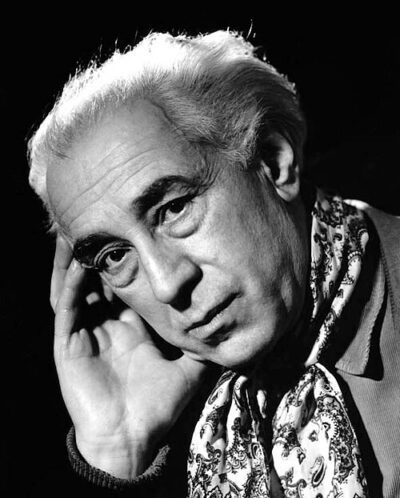
Abel Gance
Abel Gance was a French film director and producer, writer and actor. Born October 25, 1889, in rue de la Charbonnière. Died November 10, 1981, in rue de l'Yvette. Educated at Lycée Chaptal. Awards include BAFTA Fellowship.
Facts
17 facts · 2 confirmed by two sources · 6 cited · 9 from one source
Where this comes from
Papalocal keeps its own record. It started from these sources; what each one said is kept here as it was copied, so a change on their side never changes this page by itself. Tap one to read its version.
What Wikidata says · copied November 16, 2026 · revision 2557345549
- Described as
- French film director and producer, writer and actor (1889-1981)
- Born
- October 25, 1889 · 16 references
- Died
- November 10, 1981 · 12 references
- Born in
- rue de la Charbonnière · 1 reference
- Died in
- rue de l'Yvette · 1 reference
- Buried in
- Auteuil Cemetery
- Cause of death
- tuberculosis
- Name at birth
- Abel Eugène Alexandre Perthon · 1 reference
- Citizen of
- France
- Occupation
- screenwriter; film actor; film director · 1 reference; film producer · 1 reference; film editor; director · 1 reference
- Education
- Lycée Chaptal
- Awards
- BAFTA Fellowship (1981)
- Spouse
- Sylvie Gance (1933–1978)
- Wikipedias with a page
- 47
Wikidata item Q313572 (wikidata.org/wiki/Q313572), public domain (CC0). Copied November 16, 2026.
What Wikipedia says · copied November 16, 2026 · revision 1382687915
Abel Gance (French: [gɑ̃s]; born Abel Eugène Alexandre Péréthon; 25 October 1889 – 10 November 1981) was a French film director, producer, writer, and actor. A pioneer in the theory and practice of montage, he is best known for three major silent films: J'accuse (1919), La Roue (1923), and Napoléon (1927).
- Born, in its opening lines
- October 25, 1889
- Died, in its opening lines
- November 10, 1981
From the Wikipedia article “Abel Gance” (en.wikipedia.org/wiki/Abel_Gance), by its contributors, under CC BY-SA 4.0 (creativecommons.org/licenses/by-sa/4.0/). Copied November 16, 2026; not changed.
Confirmed Two sources agree. Cited One source, and it names where it got it. One source One source, without a reference of its own. Sources disagree The sources disagree. We show the best-supported value and keep theirs below.
