
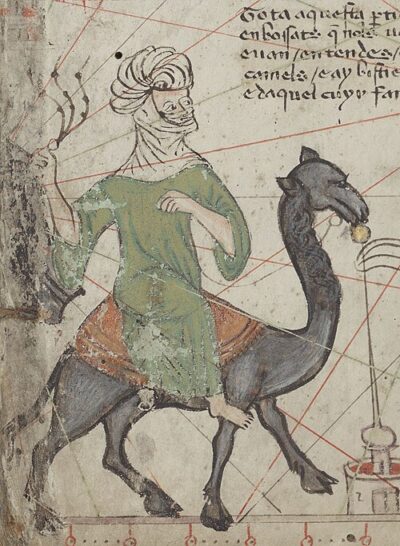
Abu Bakr ibn Umar
Abu Bakr ibn Umar was an Almoravid general. Born 11th century. Died 1088, in Tagant. Positions held include Almoravid emir (1056–1087).
Facts
10 facts · 0 confirmed by two sources · 2 cited · 8 from one source
Where this comes from
Papalocal keeps its own record. It started from these sources; what each one said is kept here as it was copied, so a change on their side never changes this page by itself. Tap one to read its version.
What Wikidata says · copied November 18, 2026 · revision 2533201719
- Described as
- Almoravid general
- Born
- 11th century
- Died
- 1088 · 1 reference
- Died in
- Tagant · 1 reference
- Citizen of
- Almoravid dynasty
- Occupation
- military officer
- Positions held
- Almoravid emir (1056–1087)
- Spouse
- Zaynab an-Nafzawiyyah
- Siblings
- Yahya ibn Umar al-Lamtuni
- Religion
- Islam; Sunni Islam
- Wikipedias with a page
- 22
Wikidata item Q334882 (wikidata.org/wiki/Q334882), public domain (CC0). Copied November 18, 2026.
What Wikipedia says · copied November 18, 2026 · revision 1377241826
Abu Bakr ibn Umar ibn Ibrahim ibn Turgut, sometimes suffixed al-Sanhaji or al-Lamtuni (died 1087; Arabic: أبو بكر بن عمر اللمتوني, romanized: Abū Bakr ibn 'Umar al Lamtūnī) was a chieftain of the Lamtuna Berber Tribe and Amir of the Almoravids from 1056 until his death. He is credited to have founded the Moroccan city of Marrakesh, and under his rule the heretic Barghawatas were destroyed. His campaigns may have included attacking the Ghana Empire, although the Almoravid impact on and relationship with sub-Saharan states is disputed amongst historians. In November of 1087, Abu Bakr died of a poisoned arrow in what is now Mauritania.
From the Wikipedia article “Abu Bakr ibn Umar” (en.wikipedia.org/wiki/Abu_Bakr_ibn_Umar), by its contributors, under CC BY-SA 4.0 (creativecommons.org/licenses/by-sa/4.0/). Copied November 18, 2026; not changed.
Confirmed Two sources agree. Cited One source, and it names where it got it. One source One source, without a reference of its own. Sources disagree The sources disagree. We show the best-supported value and keep theirs below.
