
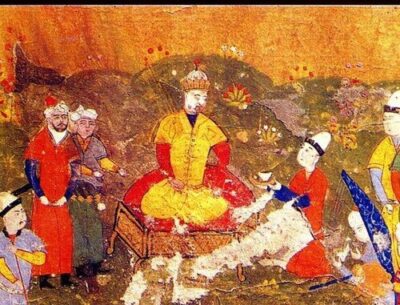
Abu'l-Khayr Khan
Abu'l-Khayr Khan was a Khan of the Uzbek Khanate. Born 1412. Died 1468, in Southern Kazakhstan. Positions held include khan (1428–1468).
Facts
13 facts · 2 confirmed by two sources · 1 cited · 10 from one source
Where this comes from
Papalocal keeps its own record. It started from these sources; what each one said is kept here as it was copied, so a change on their side never changes this page by itself. Tap one to read its version.
What Wikidata says · copied November 16, 2026 · revision 2565252290
- Described as
- Khan of the Uzbek Khanate (1412-1468)
- Other names
- Abu al-Khayr Khan, Abu'l-Chair
- Born
- 1412
- Died
- 1468
- Died in
- Southern Kazakhstan · 1 reference
- Occupation
- politician
- Positions held
- khan (1428–1468)
- Spouse
- Rabiya Sultan Begim (1451–1468) · 1 reference
- Children
- Kuchkunji Khan; Suyonchkhodja khan; Shaikh-Khaidar; Xah Budah Sultan; Khwaja-Muhammad
- Father
- Devlet Sejk
- Religion
- Islam
- Wikipedias with a page
- 35
Wikidata item Q1149056 (wikidata.org/wiki/Q1149056), public domain (CC0). Copied November 16, 2026.
What Wikipedia says · copied November 16, 2026 · revision 1385455784
Abu'l-Khayr Khan (Turki/Kypchak and Persian: ابو الخیر خان; c. 1412 – 1468), also known as Bulgar Khan, was Khan of the Uzbek Khanate from 1428 to 1468, which united the nomadic Central Asian tribes.
He created one of the largest and most powerful Turkic states during the period of the 15th century. The Uzbek Khanate weakened in the decades following his death in 1468. He was succeeded by his son Sheikh Khaidar.
- Born, in its opening lines
- 1412
- Died, in its opening lines
- 1468
From the Wikipedia article “Abu'l-Khayr Khan” (en.wikipedia.org/wiki/Abu'l-Khayr_Khan), by its contributors, under CC BY-SA 4.0 (creativecommons.org/licenses/by-sa/4.0/). Copied November 16, 2026; not changed.
Confirmed Two sources agree. Cited One source, and it names where it got it. One source One source, without a reference of its own. Sources disagree The sources disagree. We show the best-supported value and keep theirs below.
