
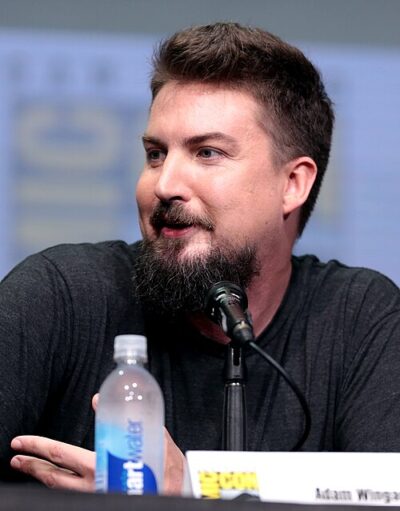
Adam Wingard
Adam Wingard is an American film director. Born December 3, 1982, in Oak Ridge. Educated at Full Sail University.
Facts
13 facts · 1 confirmed by two sources · 5 cited · 7 from one source
Where this comes from
Papalocal keeps its own record. It started from these sources; what each one said is kept here as it was copied, so a change on their side never changes this page by itself. Tap one to read its version.
What Wikidata says · copied November 16, 2026 · revision 2563099841
- Described as
- American film director
- Born
- December 3, 1982
- Born in
- Oak Ridge
- Citizen of
- United States
- Occupation
- film director; cinematographer · 1 reference; screenwriter; film editor; actor; film screenwriter · 1 reference; director · 1 reference
- Education
- Full Sail University
- Field
- film direction · 1 reference; film screenwriting · 1 reference
- Wikipedias with a page
- 22
Wikidata item Q4679987 (wikidata.org/wiki/Q4679987), public domain (CC0). Copied November 16, 2026.
What Wikipedia says · copied November 16, 2026 · revision 1383556646
Adam Wingard ( WING-gard; born December 3, 1982) is an American filmmaker. He has served as a film director, producer, screenwriter, editor, cinematographer, actor, and composer on numerous American films.
Following an early career as a member of the mumblecore movement, he became notable for his works in the horror and action genres, especially the films You're Next (2011), and The Guest (2014), and the bigger-budget franchise films Blair Witch (2016), Death Note (2017), Godzilla vs. Kong (2021), and its sequel Godzilla x Kong: The New Empire (2024).
- Born, in its opening lines
- December 3, 1982
From the Wikipedia article “Adam Wingard” (en.wikipedia.org/wiki/Adam_Wingard), by its contributors, under CC BY-SA 4.0 (creativecommons.org/licenses/by-sa/4.0/). Copied November 16, 2026; not changed.
Confirmed Two sources agree. Cited One source, and it names where it got it. One source One source, without a reference of its own. Sources disagree The sources disagree. We show the best-supported value and keep theirs below.
