
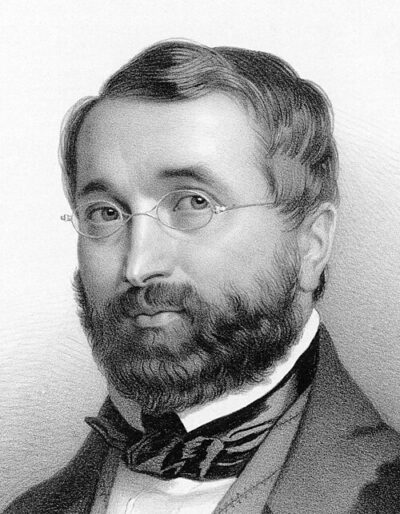
Adolphe Adam
Adolphe Adam was a French composer. Born July 24, 1803, in former 3rd arrondissement of Paris. Died May 3, 1856, in former 2nd arrondissement of Paris. Known for O Holy Night, Le postillon de Lonjumeau and La poupée de Nuremberg. Educated at Conservatoire de Paris. Awards include Prix de Rome and Officer of the Legion of Honour.
Facts
27 facts · 2 confirmed by two sources · 11 cited · 14 from one source
Where this comes from
Papalocal keeps its own record. It started from these sources; what each one said is kept here as it was copied, so a change on their side never changes this page by itself. Tap one to read its version.
What Wikidata says · copied November 16, 2026 · revision 2565537552
- Described as
- French composer (1803–1856)
- Other names
- Adolphe Charles Adam, Adolphe-Charles Adam, Adolphe C. Adam
- Born
- July 24, 1803 · 16 references
- Died
- May 3, 1856 · 14 references
- Born in
- former 3rd arrondissement of Paris · 4 references
- Died in
- former 2nd arrondissement of Paris · 4 references
- Buried in
- Montmartre Cemetery · 1 reference
- Name at birth
- Adolphe-Charles Adam · 1 reference
- Citizen of
- France · 1 reference
- Occupation
- composer · 2 references; music critic; music educator; pianist; critic · 1 reference; musician · 1 reference
- Worked for
- Conservatoire de Paris
- Education
- Conservatoire de Paris
- Member of
- Académie des beaux-arts
- Genre
- opera; classical music · 1 reference
- Instrument
- piano
- Known for
- O Holy Night; Le postillon de Lonjumeau; La poupée de Nuremberg; Le toréador
- Awards
- Prix de Rome · 1 reference; Officer of the Legion of Honour
- Spouse
- Chérie-Louise Couraud · 1 reference
- Father
- Louis Adam · 1 reference
- Wikipedias with a page
- 54
Wikidata item Q189544 (wikidata.org/wiki/Q189544), public domain (CC0). Copied November 16, 2026.
What Wikipedia says · copied November 16, 2026 · revision 1380544202
Adolphe Charles Adam (French: [adɔlf adɑ̃]; 24 July 1803 – 3 May 1856) was a French composer, teacher and music critic. A prolific composer for the theatre, he is best known today for his ballets Giselle (1841) and Le corsaire (1856), his operas Le postillon de Lonjumeau (1836) and Si j'étais roi (1852) and his Christmas carol "Minuit, chrétiens!" ("Midnight, Christians", 1847, known in English as "O Holy Night").
Adam was the son of a well-known composer and pianist, but his father did not wish him to pursue a musical career. Adam defied his father, and his many operas and ballets earned him a good living until he lost all his money in 1848 in a disastrous bid to open a new opera house in Paris in competition with the Opéra and Opéra-Comique. He recovered, and extended his activities to journalism and teaching. He was appointed as a professor at the Paris Conservatoire, France's principal music academy.
Together with his older contemporary Daniel Auber and his teacher Adrien Boieldieu, Adam is credited with creating the later Romantic French form of opera.
- Born, in its opening lines
- July 24, 1803
- Died, in its opening lines
- May 3, 1856
From the Wikipedia article “Adolphe Adam” (en.wikipedia.org/wiki/Adolphe_Adam), by its contributors, under CC BY-SA 4.0 (creativecommons.org/licenses/by-sa/4.0/). Copied November 16, 2026; not changed.
Confirmed Two sources agree. Cited One source, and it names where it got it. One source One source, without a reference of its own. Sources disagree The sources disagree. We show the best-supported value and keep theirs below.
