
Ælla
Ælla was a king of Northumbria in the middle of the 9th century. Born 8th century. Died March 21, 867, in York. Positions held include King of Northumbria (–867).
Facts
9 facts · 1 confirmed by two sources · 1 cited · 7 from one source
Where this comes from
Papalocal keeps its own record. It started from these sources; what each one said is kept here as it was copied, so a change on their side never changes this page by itself. Tap one to read its version.
What Wikidata says · copied November 17, 2026 · revision 2558289566
- Described as
- king of Northumbria in the middle of the 9th century
- Other names
- Ælle, Aella of Northumbria, Aelle, Aella
- Born
- 8th century
- Died
- March 21, 867
- Died in
- York · 1 reference
- Cause of death
- blood eagle
- Citizen of
- Kingdom of Northumbria
- Occupation
- sovereign
- Positions held
- King of Northumbria (–867)
- Children
- Blaeja
- Siblings
- Osberht · 1 reference
- Wikipedias with a page
- 27
Wikidata item Q271398 (wikidata.org/wiki/Q271398), public domain (CC0). Copied November 17, 2026.
What Wikipedia says · copied November 17, 2026 · revision 1378650786
Ælla (or Ælle or Aelle, fl. 866; died 21 March 867) was King of Northumbria, a kingdom in early medieval England, during the middle of the 9th century. Sources on Northumbrian history in this period are limited, and so Ælla's ancestry is not known, and the dating of the beginning of his reign is questionable.
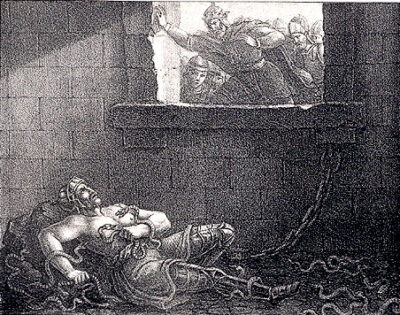
In addition to the Anglo-Saxon Chronicle, Ælla is also mentioned in Scandinavian oral sources, such as the Norse sagas. According to the latter, Ælla captured the legendary Swedish-Danish Viking king Ragnar Lodbrok and put him to death in a pit of snakes. The historical invasion of Northumbria by the Great Heathen Army in 866 occurred in retaliation for Ragnar's execution, according to Ragnarssona þáttr (The Tale of Ragnar's Sons). While Norse sources claim that Ragnar's sons tortured Ælla to death by the method of the blood eagle, Anglo-Saxon accounts maintain that he died in battle at York on 21 March 867. Concerning the Norse claim, Roberta Frank reviewed the historical evidence for the ritual in her Viking Atrocity and Skaldic Verse: The Rite of the Blood-Eagle, where she writes: "By the beginning of the ninth century, the various saga motifs—eagle sketch, rib division, lung surgery, and 'saline stimulant'—were combined in inventive sequences designed for maximum horror." She concludes that the authors of the sagas misunderstood alliterative kennings that alluded to leaving one's foes face down on the battlefield, their backs torn as carrion by scavenging birds. If this is to be believed, then it is easy to surmise that the mention of his death via the blood eagle is in fact a description of his death on the battlefield, which would make both accounts of his death consistent.
- Died, in its opening lines
- March 21, 867
From the Wikipedia article “Ælla of Northumbria” (en.wikipedia.org/wiki/Ælla_of_Northumbria), by its contributors, under CC BY-SA 4.0 (creativecommons.org/licenses/by-sa/4.0/). Copied November 17, 2026; not changed.
Confirmed Two sources agree. Cited One source, and it names where it got it. One source One source, without a reference of its own. Sources disagree The sources disagree. We show the best-supported value and keep theirs below.
