
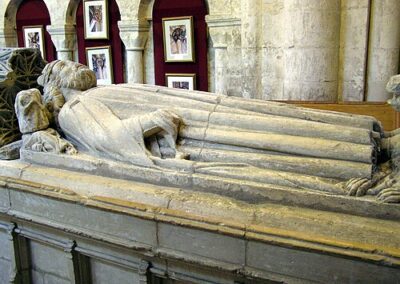
Æthelstan
Æthelstan was a King of Wessex and first king of England (r. 924-939). Born 895, in Kingdom of Wessex. Died October 27, 939, in Gloucester. Positions held include Monarch of England (927–939).
Facts
22 facts · 1 confirmed by two sources · 5 cited · 15 from one source · 1 where the sources disagree
What’s different
- Born: we show 895 (Sources disagree). Wikipedia says c. 894
- Died: we show October 27, 939 (Confirmed). Wikidata also lists October 26, 939
Where this comes from
Papalocal keeps its own record. It started from these sources; what each one said is kept here as it was copied, so a change on their side never changes this page by itself. Tap one to read its version.
What Wikidata says · copied November 16, 2026 · revision 2568057411
- Described as
- King of Wessex and first king of England (r. 924-939)
- Other names
- Ethelstan, Æthelstan of England, Ethelstan of England, Æthelstan of Wessex, King Athelstan, Æthelstan, king of Wessex, Ethelstan of Wessex, Ethelstan, king of England, King Aethelstan, King Ethelstan, Aethelstan of England, Athelstan, king of Wessex
- Born
- 895 · 5 references
- Died
- October 27, 939; October 26, 939
- Born in
- Kingdom of Wessex · 1 reference
- Died in
- Gloucester · 1 reference
- Buried in
- Malmesbury Abbey
- Citizen of
- Kingdom of Wessex; Kingdom of England
- Occupation
- monarch
- Positions held
- Monarch of England (927–939)
- Children
- Haakon the Good · 1 reference
- Father
- Edward the Elder · 2 references
- Mother
- Ecgwynn · 2 references
- Siblings
- Eadgyth; Eadgifu of Wessex; Eadburh of Winchester; Edmund I; Edred of England; Ælfweard of Wessex; Edwin, son of Edward the Elder; Edith of Polesworth · 1 reference; Eadhild
- Religion
- Chalcedonian Christianity
- Wikipedias with a page
- 74
Wikidata item Q170017 (wikidata.org/wiki/Q170017), public domain (CC0). Copied November 16, 2026.
What Wikipedia says · copied November 16, 2026 · revision 1385645156
Æthelstan or Athelstan (; Old English: Æðelstān [ˈæðelstɑːn]; Old Norse: Aðalsteinn; lit. 'noble stone'; c. 894 – 27 October 939) was King of the Anglo-Saxons from 924 to 927 and King of the English from 927 to his death in 939. He was the son of King Edward the Elder and his first wife, Ecgwynn. Modern historians regard him as the first King of England and one of the "greatest Anglo-Saxon kings". He never married and had no children; he was succeeded by his half-brother, Edmund I.
When Edward died in July 924, Æthelstan was accepted by the Mercians as king. His half-brother Ælfweard may have been recognised as king in Wessex, but died within three weeks of their father's death. Æthelstan encountered resistance in Wessex for several months, and was not crowned until September 925. In 927, he conquered the last remaining Viking kingdom, York, making him the first Anglo-Saxon ruler of the whole of England. In 934, he invaded Scotland and forced Constantine II to submit to him. Æthelstan's rule was resented by the Scots and Vikings, and in 937 they invaded England. Æthelstan defeated them at the Battle of Brunanburh, a victory that gave him great prestige both in the British Isles and on the Continent. After his death in 939, the Vikings seized back control of York, and it was not finally reconquered until 954.
Æthelstan centralised government; he increased control over the production of charters and summoned leading figures from distant areas to his councils. These meetings were also attended by rulers from outside his territory, especially Welsh kings, who thus acknowledged his overlordship. More legal texts survive from his reign than from any other tenth-century English king. They show his concern about widespread robberies and the threat they posed to social order. His legal reforms built on those of his grandfather, Alfred the Great. Æthelstan was one of the most pious West Saxon kings, and was known for collecting relics and founding churches. His household was the centre of English learning during his reign, and it laid the foundation for the Benedictine monastic reform later in the century. No other West Saxon king played as important a role in European politics as Æthelstan, and he arranged the marriages of several of his sisters to continental rulers.
- Born, in its opening lines
- c. 894
- Died, in its opening lines
- October 27, 939
From the Wikipedia article “Æthelstan” (en.wikipedia.org/wiki/Æthelstan), by its contributors, under CC BY-SA 4.0 (creativecommons.org/licenses/by-sa/4.0/). Copied November 16, 2026; not changed.
Confirmed Two sources agree. Cited One source, and it names where it got it. One source One source, without a reference of its own. Sources disagree The sources disagree. We show the best-supported value and keep theirs below.
