
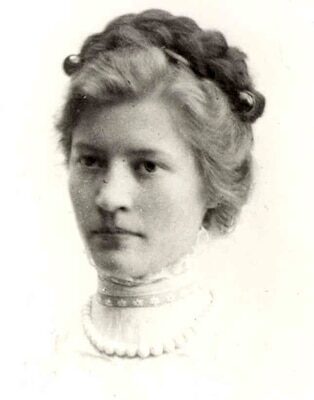
Agnes Meyer Driscoll
Agnes Meyer Driscoll was an American cryptographer. Born July 24, 1889, in Geneseo. Died September 16, 1971, in Fairfax. Educated at Ohio State University and Otterbein University.
Facts
16 facts · 2 confirmed by two sources · 2 cited · 12 from one source
Where this comes from
Papalocal keeps its own record. It started from these sources; what each one said is kept here as it was copied, so a change on their side never changes this page by itself. Tap one to read its version.
What Wikidata says · copied November 18, 2026 · revision 2554007402
- Described as
- American cryptographer
- Other names
- Miss Aggie, Madame X
- Born
- July 24, 1889 · 1 reference
- Died
- September 16, 1971 · 1 reference
- Born in
- Geneseo
- Died in
- Fairfax · 1 reference
- Buried in
- Arlington National Cemetery (1971) · 1 reference
- Citizen of
- United States
- Occupation
- mathematician; cryptanalyst; cryptographer · 1 reference
- Worked for
- United States Navy; Armed Forces Security Agency; National Security Agency
- Education
- Ohio State University; Otterbein University · 1 reference
- Field
- cryptography
- Military rank
- yeoman
- Wikipedias with a page
- 15
Wikidata item Q258206 (wikidata.org/wiki/Q258206), public domain (CC0). Copied November 18, 2026.
What Wikipedia says · copied November 18, 2026 · revision 1379514661
Agnes Meyer Driscoll (July 24, 1889 – September 16, 1971), known as "Miss Aggie" or "Madame X'", was an American
cryptanalyst during both World War I and World War II and was known as "the first lady of naval cryptology."
- Born, in its opening lines
- July 24, 1889
- Died, in its opening lines
- September 16, 1971
From the Wikipedia article “Agnes Meyer Driscoll” (en.wikipedia.org/wiki/Agnes_Meyer_Driscoll), by its contributors, under CC BY-SA 4.0 (creativecommons.org/licenses/by-sa/4.0/). Copied November 18, 2026; not changed.
Confirmed Two sources agree. Cited One source, and it names where it got it. One source One source, without a reference of its own. Sources disagree The sources disagree. We show the best-supported value and keep theirs below.
