
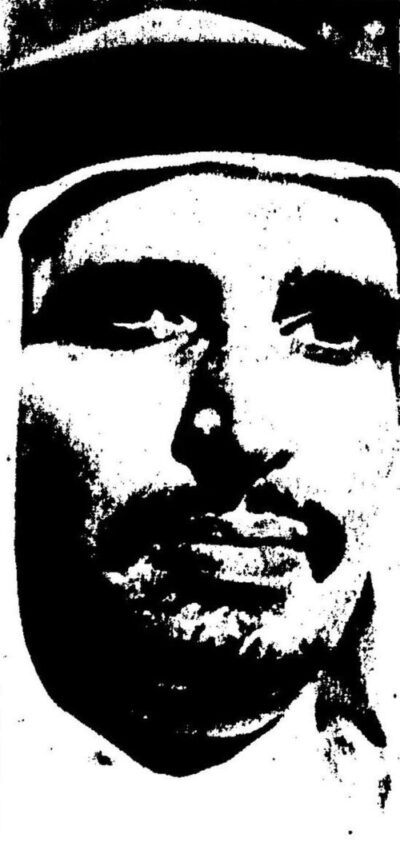
Ahmad bin Ali Al Thani
Ahmad bin Ali Al Thani was an Emir of Qatar. Born 1920, in Doha. Died November 25, 1977, in London. Positions held include Emir of the State of Qatar (1960–1972).
Facts
10 facts · 1 confirmed by two sources · 1 cited · 7 from one source · 1 where the sources disagree
What’s different
- Born: we show 1920 (Sources disagree). Wikipedia says 1922
Where this comes from
Papalocal keeps its own record. It started from these sources; what each one said is kept here as it was copied, so a change on their side never changes this page by itself. Tap one to read its version.
What Wikidata says · copied November 18, 2026 · revision 2559160435
- Described as
- Emir of Qatar
- Born
- 1920
- Died
- November 25, 1977
- Born in
- Doha
- Died in
- London
- Cause of death
- cancer
- Citizen of
- Qatar
- Occupation
- politician
- Positions held
- Emir of the State of Qatar (1960–1972) · 1 reference
- Children
- Abdelaziz bin Ahmed Al Thani
- Father
- Ali bin Abdullah Al Thani
- Wikipedias with a page
- 24
Wikidata item Q2827460 (wikidata.org/wiki/Q2827460), public domain (CC0). Copied November 18, 2026.
What Wikipedia says · copied November 18, 2026 · revision 1384852969
Ahmad bin Ali bin Abdullah bin Jassim bin Mohammed Al Thani (Arabic: أحمد بن علي بن عبد الله بن جاسم بن محمد آل ثاني; 1922 – 25 November 1977) was the Emir of Qatar who ruled from 1960 to 1972. Qatar's financial status improved significantly during his reign as a result of the enrichment and discovery of several new oil fields. Qatar also became a sovereign state in September 1971 under his rule. He was deposed in February 1972 by his cousin, Khalifa bin Hamad Al Thani.
- Born, in its opening lines
- 1922
- Died, in its opening lines
- November 25, 1977
From the Wikipedia article “Ahmad bin Ali Al Thani” (en.wikipedia.org/wiki/Ahmad_bin_Ali_Al_Thani), by its contributors, under CC BY-SA 4.0 (creativecommons.org/licenses/by-sa/4.0/). Copied November 18, 2026; not changed.
Confirmed Two sources agree. Cited One source, and it names where it got it. One source One source, without a reference of its own. Sources disagree The sources disagree. We show the best-supported value and keep theirs below.
