
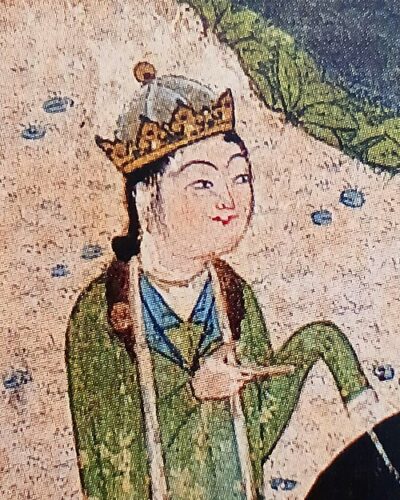
Ahmad Jalayir
Ahmad Jalayir was a Jalayirid Sultan from 1382 to 1410. Born 1382. Died August 31, 1410, in Tabriz.
Facts
24 facts · 2 confirmed by two sources · 0 cited · 22 from one source
Where this comes from
Papalocal keeps its own record. It started from these sources; what each one said is kept here as it was copied, so a change on their side never changes this page by itself. Tap one to read its version.
What Wikidata says · copied November 18, 2026 · revision 2467559585
- Described as
- Jalayirid Sultan from 1382 to 1410 (1382–1410)
- Other names
- Sultan Ahmed Jalayir
- Born
- 1382
- Died
- August 31, 1410
- Died in
- Tabriz · 1 reference
- Cause of death
- strangling
- Citizen of
- Jalayirid Sultanate
- Occupation
- poet; monarch; politician; writer; calligrapher; astronomer; patron of the arts
- Field
- politics; literature; astronomy; arts
- Children
- Ala al-Dawla ibn Ahmad
- Father
- Shaykh Uways Jalayir
- Siblings
- Shaikh Hasan Jalayir; Husain; Bayazid; Döndü Hatun
- Religion
- Islam; Shia Islam
- Wikipedias with a page
- 20
Wikidata item Q1070476 (wikidata.org/wiki/Q1070476), public domain (CC0). Copied November 18, 2026.
What Wikipedia says · copied November 18, 2026 · revision 1378362310
Sultan Ahmad (سلطان احمد جلایر) was the ruler of the Jalayirid Sultanate (ruled 1382–1410). He was son to the most accomplished ruler of the sultanate, Shaykh Uways Jalayir. Early in his reign, he was involved in conflicts with his brothers. He would later suffer from several defeats from Timur and eventually imprisoned by the Mamluks. After being set free, he attacked his old enemy, the Qara Qoyunlu but was later captured and executed in 1410.
- Born, in its opening lines
- 1382
- Died, in its opening lines
- 1410
From the Wikipedia article “Ahmad Jalayir” (en.wikipedia.org/wiki/Ahmad_Jalayir), by its contributors, under CC BY-SA 4.0 (creativecommons.org/licenses/by-sa/4.0/). Copied November 18, 2026; not changed.
Confirmed Two sources agree. Cited One source, and it names where it got it. One source One source, without a reference of its own. Sources disagree The sources disagree. We show the best-supported value and keep theirs below.
