
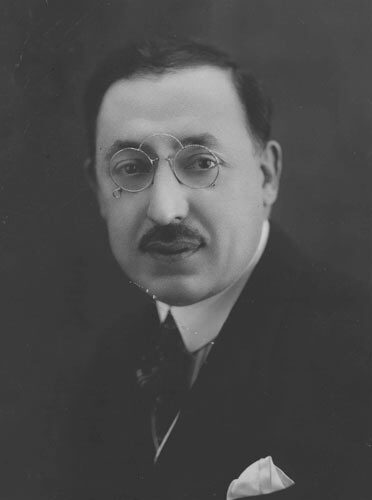
Ahmad Qavam
Ahmad Qavam was a Prime Minister of Iran. Born 1875, in Tehran. Died July 23, 1955, in Tehran. Positions held include Prime Minister of Iran (4 times) (1921–1952) and Foreign Affairs Minister of Iran (2 times) (1922–1946).
Facts
14 facts · 1 confirmed by two sources · 2 cited · 10 from one source · 1 where the sources disagree
What’s different
- Born: we show 1875 (Sources disagree). Wikidata also lists January 2, 1876
Where this comes from
Papalocal keeps its own record. It started from these sources; what each one said is kept here as it was copied, so a change on their side never changes this page by itself. Tap one to read its version.
What Wikidata says · copied November 16, 2026 · revision 2564475755
- Described as
- Prime Minister of Iran (1876-1955)
- Born
- January 2, 1876; 1875 · 1 reference
- Died
- July 23, 1955 · 2 references
- Born in
- Tehran
- Died in
- Tehran
- Buried in
- Fatima Masumeh Shrine · 1 reference
- Citizen of
- Iran
- Occupation
- politician · 1 reference; head of government · 1 reference
- Positions held
- Prime Minister of Iran (4 times) (1921–1952); Foreign Affairs Minister of Iran (2 times) (1922–1946) · 1 reference
- Political party
- Democrat Party · 1 reference
- Father
- Mirza Ebrahim Motamed os-Saltaneh
- Religion
- Islam; Shia Islam
- Wikipedias with a page
- 28
Wikidata item Q400712 (wikidata.org/wiki/Q400712), public domain (CC0). Copied November 16, 2026.
What Wikipedia says · copied November 16, 2026 · revision 1384743081
Ahmad Qavam (Persian: احمد قوام; 2 January 1873 – 23 July 1955), also known as Qavam os-Saltaneh (Persian: قوام السلطنه), was an Iranian politician who served as Prime Minister of Iran five times.
- Born, in its opening lines
- January 2, 1873
- Died, in its opening lines
- July 23, 1955
From the Wikipedia article “Ahmad Qavam” (en.wikipedia.org/wiki/Ahmad_Qavam), by its contributors, under CC BY-SA 4.0 (creativecommons.org/licenses/by-sa/4.0/). Copied November 16, 2026; not changed.
Confirmed Two sources agree. Cited One source, and it names where it got it. One source One source, without a reference of its own. Sources disagree The sources disagree. We show the best-supported value and keep theirs below.
