
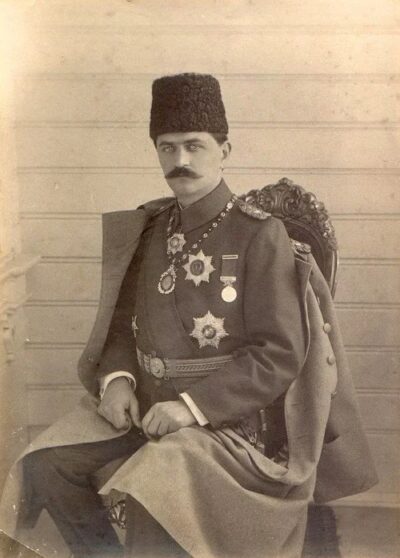
Ahmed Nihad Efendi
Ahmed Nihad Efendi was an Ottoman noble. Born July 5, 1883, in Istanbul. Died June 4, 1954, in Beirut. Positions held include sultan of the Ottoman Empire.
Facts
14 facts · 2 confirmed by two sources · 0 cited · 12 from one source
Where this comes from
Papalocal keeps its own record. It started from these sources; what each one said is kept here as it was copied, so a change on their side never changes this page by itself. Tap one to read its version.
What Wikidata says · copied November 17, 2026 · revision 2553299857
- Described as
- Ottoman noble (1883–1954)
- Other names
- Şehzade Nihad, Şehzade Ahmed Nihad Efendi, Şehzade Nihad Efendi, Ahmed Nihad, Ahmed Nihad Osmanoğlu
- Born
- July 5, 1883
- Died
- June 4, 1954
- Born in
- Istanbul
- Died in
- Beirut
- Buried in
- cemetery of the Sulaymaniyya Takiyya
- Citizen of
- Ottoman Empire
- Occupation
- politician; statesperson; composer
- Positions held
- sultan of the Ottoman Empire
- Children
- Şehzade Ali Vâsib
- Father
- Şehzade Mehmed Selaheddin
- Siblings
- Osman Fuad Efendi
- Religion
- Islam
- Wikipedias with a page
- 25
Wikidata item Q2666876 (wikidata.org/wiki/Q2666876), public domain (CC0). Copied November 17, 2026.
What Wikipedia says · copied November 17, 2026 · revision 1384005098
Şehzade Ahmed Nihad Efendi (Ottoman Turkish: احمد نهاد, also Ahmed Nihad Osmanoğlu; 5 July 1883 – 4 June 1954) was an Ottoman prince, the son of Şehzade Mehmed Selaheddin, and the grandson of Sultan Murad V. He was the 38th Head of the Imperial House of Osman from 1944 to 1954.
The word Şehzade is a title, meaning "prince of the blood".
- Born, in its opening lines
- July 5, 1883
- Died, in its opening lines
- June 4, 1954
From the Wikipedia article “Şehzade Ahmed Nihad” (en.wikipedia.org/wiki/Şehzade_Ahmed_Nihad), by its contributors, under CC BY-SA 4.0 (creativecommons.org/licenses/by-sa/4.0/). Copied November 17, 2026; not changed.
Confirmed Two sources agree. Cited One source, and it names where it got it. One source One source, without a reference of its own. Sources disagree The sources disagree. We show the best-supported value and keep theirs below.
