
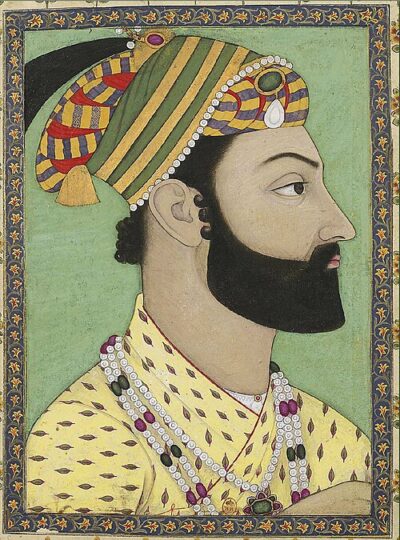
Ahmed Shahe Durrani
Ahmed Shahe Durrani was a founder of the Afghan Durrani Empire (r. 1747–1772). Born 1722, in Herat. Died October 16, 1772, in Kandahar. Positions held include Head of State of Afghanistan (1747–1772).
Facts
15 facts · 0 confirmed by two sources · 0 cited · 14 from one source · 1 where the sources disagree
What’s different
- Born: we show 1722 (Sources disagree). Wikipedia says October 23, 1772
Where this comes from
Papalocal keeps its own record. It started from these sources; what each one said is kept here as it was copied, so a change on their side never changes this page by itself. Tap one to read its version.
What Wikidata says · copied November 16, 2026 · revision 2568103445
- Described as
- founder of the Afghan Durrani Empire (r. 1747–1772)
- Other names
- Ahmad Shah Durrani, Ahmed Shah
- Born
- 1722
- Died
- October 16, 1772 · 1 reference
- Born in
- Herat
- Died in
- Kandahar
- Buried in
- Tomb of Ahmad Shah Durrani
- Citizen of
- Durrani Empire
- Occupation
- monarch; poet
- Positions held
- Head of State of Afghanistan (1747–1772)
- Spouse
- Hazrat Begum · 1 reference
- Children
- Timur Shah Durrani
- Mother
- Zarghona Anaa
- Religion
- Islam; Sunni Islam
- Military rank
- general
- Wikipedias with a page
- 74
Wikidata item Q46798 (wikidata.org/wiki/Q46798), public domain (CC0). Copied November 16, 2026.
What Wikipedia says · copied November 16, 2026 · revision 1384263733
Ahmad Shah Durrani (born Ahmad Khan Abdali; c. 1720–1722 – 16–23 October 1772) was the first ruler and founder of the Durrani Empire. He is often regarded as the founder of modern Afghanistan. As Shah, he relentlessly led military campaigns for over 25 years across West Asia, Central Asia, and South Asia, creating one of the largest Islamic empires in the world, encompassing Afghanistan, much of Pakistan, Iranian Khorasan, and parts of Northern India.
Born between 1720 and 1722, Ahmad Shah accompanied Nader Shah in his campaigns until Nader's assassination in 1747, which resulted in the division of the Afsharid Empire. Ahmad Shah took advantage and was crowned near Kandahar, establishing his rule in Afghanistan and founding the Durrani Empire.
In 1748, he invaded the Mughal Empire and began a series of invasions into India that would span the next 24 years. Following his third invasion of India, Ahmad Shah annexed Punjab and Kashmir from the Mughals. His forays continued, including the occupation and sacking of Delhi in 1757 during his fourth invasion, and the annihilation of Maratha armies at the Third Battle of Panipat, the largest battle of the 18th century, during his fifth. Outside of India, he campaigned in Khorasan and Afghan Turkestan, subjugating the Afsharids, crossed swords with the Khanate of Bukhara, and had diplomatic encounters with Qing China. In his later reign, he led numerous invasions against the Sikhs to maintain control over the Punjab. Years of nonstop campaigning took a toll on his health, and he died in 1772 in Maruf. He was buried in Kandahar, where his mausoleum is located.
Throughout his reign, Ahmad Shah fought over fifteen major military campaigns. Nine of them were centered in present-day India, three in Khorasan, and three in Afghan Turkestan. Having rarely lost a battle, historians widely recognize Ahmad Shah as a brilliant military leader and tactician, typically being compared to military leaders such as Marlborough, Mahmud of Ghazni, Babur, and Nader Shah. Ahmad Shah has been described as one of the greatest military leaders of eighteenth century Asia, as well the "greatest general of Asia of his time", and as one of the greatest conquerors in Asian history.
His campaigns, however, left the Indian subcontinent in complete chaos and contributed to the decline of Muslim power in Northern India, with Ahmad Shah overseeing several indiscriminate massacres throughout his campaigns as well as pillaging, and mass enslavement conducted by Afghan soldiers.
- Born, in its opening lines
- October 23, 1772
From the Wikipedia article “Ahmad Shah Durrani” (en.wikipedia.org/wiki/Ahmad_Shah_Durrani), by its contributors, under CC BY-SA 4.0 (creativecommons.org/licenses/by-sa/4.0/). Copied November 16, 2026; not changed.
Confirmed Two sources agree. Cited One source, and it names where it got it. One source One source, without a reference of its own. Sources disagree The sources disagree. We show the best-supported value and keep theirs below.
