
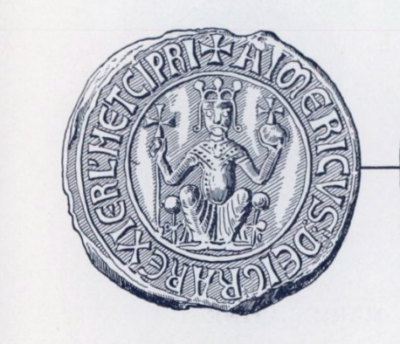
Aimery of Cyprus was a King of Cyprus and Jerusalem. Born 1152, in Poitou. Died April 1, 1205, in Acre. Positions held include constable of kingdom of Jerusalem (1181–1194) and Chamberlain of the kingdom of Jerusalem (1175–1178).
Facts
26 facts · 0 confirmed by two sources · 1 cited · 25 from one source
Where this comes from
Papalocal keeps its own record. It started from these sources; what each one said is kept here as it was copied, so a change on their side never changes this page by itself. Tap one to read its version.
What Wikidata says · copied November 16, 2026 · revision 2563340235
- Described as
- King of Cyprus and Jerusalem
- Other names
- Aimery II de Lusignan
- Born
- 1152
- Died
- April 1, 1205 · 2 references
- Born in
- Poitou
- Died in
- Acre
- Buried in
- Saint Sophia Cathedral
- Cause of death
- dysentery
- Citizen of
- Kingdom of France · 1 reference
- Occupation
- ruler
- Positions held
- constable of kingdom of Jerusalem (1181–1194); Chamberlain of the kingdom of Jerusalem (1175–1178)
- Spouse
- Isabella I of Jerusalem (1198–) · 2 references; Eschive d'Ibelin (1175–1196)
- Children
- Bourgogne de Lusignan; Guy of Lusignan; John of Lusignan; Alix of Lusignan; Helvis of Lusignan; Hugh I of Cyprus; Sibylla of Lusignan; Amalric of Lusignan; Melisende of Lusignan
- Father
- Hugh VIII of Lusignan
- Mother
- Bourgogne de Rancon
- Siblings
- Hugh of Lusignan; Guy of Lusignan; Geoffrey I of Lusignan (Lord of Vouvant)
- Wikipedias with a page
- 34
Wikidata item Q453325 (wikidata.org/wiki/Q453325), public domain (CC0). Copied November 16, 2026.
What Wikipedia says · copied November 16, 2026 · revision 1382745786
Aimery of Lusignan (Latin: Aimericus, Greek: Αμωρί, Amorí; before 1155 – 1 April 1205), erroneously referred to as Amalric (French: Amaury) in earlier scholarship, was the first king of Cyprus from 1196 and the king of Jerusalem as the husband of Queen Isabella I from 1198 to his death. He was a capable ruler whose reign was a period of peace and stability in both kingdoms, and the progenitor of the Lusignan dynasty of the Kingdom of Cyprus.
Aimery was a younger son of Hugh VIII of Lusignan, a nobleman from Poitou. After participating in a rebellion against King Henry II of England in 1168, Aimery went to the Latin East and settled in the Kingdom of Jerusalem. Aimery's marriage to Eschiva of the influential Ibelin family strengthened his position in the kingdom. His younger brother Guy married Sibylla, the sister and heir presumptive of King Baldwin IV of Jerusalem. Baldwin made Aimery constable of Jerusalem around 1180. Guy and Sibylla became king and queen in 1186. Aimery was one of the commanders of the Christian army at the Battle of Hattin, which ended with a decisive defeat of Christians by the Muslim Ayyubids in 1187 and the subsequent near destruction of the kingdom.
Aimery supported King Guy when the latter besieged Acre and remained loyal to him after Queen Sibylla's death in 1190, when most barons insisted that the throne had passed to Sibylla's half-sister, Isabella I. Amid insurmountable unpopularity, Guy left for Cyprus in 1192 while Aimery remained in the kingdom as constable. Count Henry II of Champagne married Isabella and ruled alongside her. He arrested Aimery after discovering a plot to deliver the city of Tyre to Guy. Upon his release, Aimery joined Guy in Cyprus. When Guy died in 1194, the Cypriot nobles elected Aimery as their new lord. Aimery immediately sought to raise Cyprus to the status of a kingdom, with a government and institutions modelled after those of the Kingdom of Jerusalem. He acknowledged the suzerainty of Holy Roman Emperor Henry VI, who authorized Aimery's coronation as king of Cyprus in 1197.
Soon after they were both widowed, the barons of Jerusalem offered Aimery to marry Isabella and become king of Jerusalem too; he accepted and was crowned at her side. He kept the kingdoms of Cyprus and Jerusalem separate, but sent Cypriot troops to fight on the mainland, where he spent most of his reign. He sought to codify the laws of Jerusalem, resulting in the compilation of the Livre au roi. After surviving an assassination attempt in 1198, Aimery attempted to circumvent the law to banish Isabella's seneschal, Ralph of Saint-Omer, whom he thought responsible. He signed two consecutive truces with al-Adil I, the Ayyubid sultan of Egypt, the latter of which secured the Christian possession of the coastline from Acre to Antioch. The personal union of the kingdoms of Cyprus and Jerusalem ended when Aimery died of food poisoning; Cyprus passed to his only surviving son, Hugh I, while Isabella retained the Kingdom of Jerusalem.
From the Wikipedia article “Aimery of Cyprus” (en.wikipedia.org/wiki/Aimery_of_Cyprus), by its contributors, under CC BY-SA 4.0 (creativecommons.org/licenses/by-sa/4.0/). Copied November 16, 2026; not changed.
Confirmed Two sources agree. Cited One source, and it names where it got it. One source One source, without a reference of its own. Sources disagree The sources disagree. We show the best-supported value and keep theirs below.
