
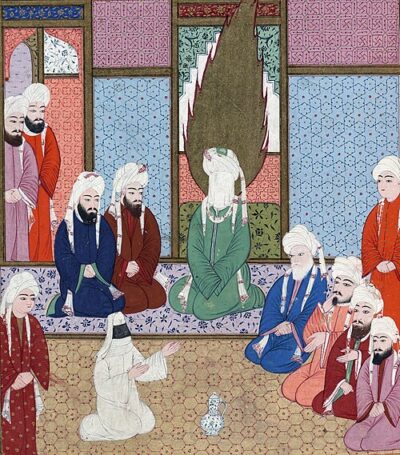
Aisha was a Muhammad's third wife (c. 613/614 – 678). Born 614, in Mecca. Died July 13, 678, in Medina.
Facts
18 facts · 0 confirmed by two sources · 2 cited · 16 from one source
Where this comes from
Papalocal keeps its own record. It started from these sources; what each one said is kept here as it was copied, so a change on their side never changes this page by itself. Tap one to read its version.
What Wikidata says · copied November 16, 2026 · revision 2568191462
- Described as
- Muhammad's third wife (c. 613/614 – 678)
- Other names
- Ayesha, Āʾishah bint Abī Bakr, Aisha bint Abu Bakr, Aishah
- Born
- 614 · 4 references
- Died
- July 13, 678 · 1 reference
- Born in
- Mecca
- Died in
- Medina
- Buried in
- Al-Baqi'
- Citizen of
- Rashidun Caliphate; Umayyad Caliphate
- Occupation
- poet
- Spouse
- Muhammad (620–632) · 1 reference
- Father
- Abu Bakr · 1 reference
- Mother
- Umm Ruman
- Siblings
- Asmā' bint Abu Bakr; Umm Kulthum bint Abi Bakr; Abd al-Rahman ibn Abi Bakr; Muhammad ibn Abi Bakr; Abd Allah ibn Abi Bakr; Tufayl ibn al-Harith
- Religion
- Islam
- Wikipedias with a page
- 108
Wikidata item Q4730963 (wikidata.org/wiki/Q4730963), public domain (CC0). Copied November 16, 2026.
What Wikipedia says · copied November 16, 2026 · revision 1373674180
Aisha bint Abi Bakr (c. 614 CE – July 678) was the third and youngest wife of Islamic prophet Muhammad. After Muhammad's death, she was politically active during the Rashidun Caliphate and stands out as a prominent female figure of the period.
A muhadditha and political figure, Aisha played a significant role in early Islamic history, both during Muhammad's life and after his death. She is regarded in Sunni tradition as intelligent, inquisitive, and scholarly, and is often described as Muhammad's most beloved wife after Khadija bint Khuwaylid. She contributed to the transmission of Muhammad's teachings and remained active in the Muslim community for 44 years after his death. Aisha is credited with narrating over 2,000 hadiths, covering not only aspects of Muhammad's personal life but also legal, ritual, and theological subjects such as inheritance, pilgrimage, prayer, and eschatology. Her intellectual abilities and knowledge of poetry, medicine, and Islamic jurisprudence were praised by early scholars, including al-Zuhri and her student Urwa ibn al-Zubayr.
In addition to her scholarly contributions, Aisha was involved in the religious, social, and political affairs of the early Muslim community. During the caliphates of Abu Bakr (her father), Umar, Uthman, and Ali, she engaged in public discourse, transmitted religious knowledge, and took part in major events, including the Battle of the Camel. Her participation in such matters was notable given the limited public roles generally held by women at the time. In Sunni Islam, she is revered as a leading scholar, hadith transmitter, and teacher of several companions and the tabi'in, while in Shia Islam, she is viewed critically for her opposition to Ali.
Aisha's reported age at marriage has become a subject of modern debate and criticism. Most early Islamic sources state that she was nine years old when the marriage was consummated. This has led to criticism of Muhammad based on contemporary views and laws on the age of consent. In Islamic literature, the young age of her marriage did not draw any significant discourse; nonetheless, scholars Denise Spellberg and Kecia Ali find the very mention of her age to be atypical of early Muslim biographers, and hypothesize a connotation to her virginity and, more than that, religious purity.
From the Wikipedia article “Aisha” (en.wikipedia.org/wiki/Aisha), by its contributors, under CC BY-SA 4.0 (creativecommons.org/licenses/by-sa/4.0/). Copied November 16, 2026; not changed.
Confirmed Two sources agree. Cited One source, and it names where it got it. One source One source, without a reference of its own. Sources disagree The sources disagree. We show the best-supported value and keep theirs below.
