
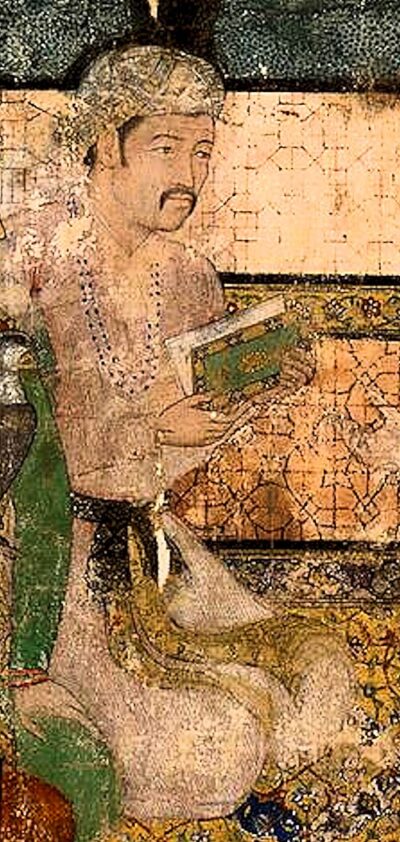
Akbar
Akbar was the third and greatest Mughal emperor from 1556 to 1605. Born October 15, 1542, in Umarkot Fort. Died October 15, 1605, in Agra. Positions held include Mughal emperor (1556–1605).
Facts
26 facts · 1 confirmed by two sources · 1 cited · 22 from one source · 2 where the sources disagree
What’s different
- Died: we show October 15, 1605 (Sources disagree). Wikipedia says October 27, 1605
- Died in: we show Agra (Sources disagree). Wikidata also lists Fatehpur Sikri
Where this comes from
Papalocal keeps its own record. It started from these sources; what each one said is kept here as it was copied, so a change on their side never changes this page by itself. Tap one to read its version.
What Wikidata says · copied November 16, 2026 · revision 2569998486
- Described as
- the third and greatest Mughal emperor from 1556 to 1605
- Other names
- Jalal-ud-Din Muhammad Akbar, Akbar the Great, Akbar Mahan, Abu'l-Fath Jalal-ud-din Muhammad Akbar, Akbar I
- Born
- October 15, 1542 · 4 references
- Died
- October 15, 1605 · 1 reference
- Born in
- Umarkot Fort · 1 reference
- Died in
- Fatehpur Sikri; Agra · 1 reference
- Buried in
- Akbar's Tomb
- Cause of death
- dysentery
- Occupation
- monarch
- Positions held
- Mughal emperor (1556–1605)
- Spouse
- Mariam-uz-Zamani (1562–); Ruqaiya Sultan Begum (1556–); Salima Sultan Begum (1561–)
- Children
- Jahangir I; Prince Murad; Prince Daniyal; Aram Banu Begum; Khanum Sultan Begum; Shakr-un-Nissa Begum; Prince Hussain; Prince Hassan
- Father
- Humayun
- Mother
- Hamida Banu Begum
- Siblings
- Bakshi Banu Begum; Mirza Muhammad Hakim; Al-aman Mirza
- Religion
- Islam (1542–1579); Din-e Ilahi (1579–1605)
- Wikipedias with a page
- 169
Wikidata item Q8597 (wikidata.org/wiki/Q8597), public domain (CC0). Copied November 16, 2026.
What Wikipedia says · copied November 16, 2026 · revision 1385388314
Akbar (Jalal-ud-Din Muhammad Akbar, (1542-10-15)15 October 1542 – (1605-10-27)27 October 1605), also known as Akbar the Great, was the third Mughal emperor, who reigned from 1556 to 1605. Akbar succeeded his father, Humayun, under a regent, Bairam Khan, who helped the young emperor expand and consolidate Mughal domains in the Indian subcontinent. He is generally considered one of the greatest Mughal emperors.
Akbar gradually enlarged the Mughal Empire to include much of the Indian subcontinent through Mughal military, political, cultural, and economic dominance. To unify the vast Mughal state, Akbar established a centralised system of administration and adopted a policy of conciliating conquered rulers through marriage and diplomacy. To preserve peace and order in a religiously and culturally diverse empire, he adopted policies that won him the support of his non-Muslim subjects, including abolishing the sectarian tax and appointing them to high civil and military posts.
Under Akbar, Mughal India developed a strong and stable economy, which tripled in size and wealth, leading to commercial expansion and greater patronage of an Indo-Persian culture. Akbar's courts at Delhi, Agra, and Fatehpur Sikri attracted holy men of many faiths, poets, architects, and artisans, and became known as centres of the arts, letters, and learning. Timurid and Perso-Islamic culture began to merge and blend with indigenous Indian elements into a distinct style of Mughal arts, including painting and architecture. Disillusioned with orthodox Islam and perhaps hoping to bring about religious unity within his empire, Akbar promulgated Din-i Ilahi, a syncretic creed derived mainly from Islam and Hinduism as well as elements of Zoroastrianism and Christianity.
Akbar was succeeded as emperor by his son, Prince Salim, later known as Jahangir.
- Born, in its opening lines
- October 15, 1542
- Died, in its opening lines
- October 27, 1605
From the Wikipedia article “Akbar” (en.wikipedia.org/wiki/Akbar), by its contributors, under CC BY-SA 4.0 (creativecommons.org/licenses/by-sa/4.0/). Copied November 16, 2026; not changed.
Confirmed Two sources agree. Cited One source, and it names where it got it. One source One source, without a reference of its own. Sources disagree The sources disagree. We show the best-supported value and keep theirs below.
