
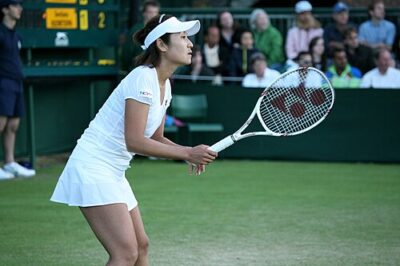
Akiko Morigami
Akiko Morigami is a Japanese tennis player. Born January 12, 1980, in Osaka. Teams include Japan Billie Jean King Cup team (2002–).
Facts
7 facts · 1 confirmed by two sources · 1 cited · 5 from one source
Where this comes from
Papalocal keeps its own record. It started from these sources; what each one said is kept here as it was copied, so a change on their side never changes this page by itself. Tap one to read its version.
What Wikidata says · copied November 18, 2026 · revision 2517530348
- Described as
- Japanese tennis player
- Born
- January 12, 1980 · 1 reference
- Born in
- Osaka · 1 reference
- Citizen of
- Japan
- Occupation
- tennis player (1998–)
- Teams
- Japan Billie Jean King Cup team (2002–)
- Sport
- tennis · 1 reference
- Height
- 1.65 m (5 ft 5 in)
- Wikipedias with a page
- 23
Wikidata item Q259276 (wikidata.org/wiki/Q259276), public domain (CC0). Copied November 18, 2026.
What Wikipedia says · copied November 18, 2026 · revision 1351996441
Akiko Morigami (森上 亜希子, Morigami Akiko; born 12 January 1980) is a Japanese former tennis player..She turned professional in 1998. On 15 August 2005, she reached her career-high singles ranking of world No. 41.
Morigami won one singles title in her career at the Prague Open, defeating top seed Marion Bartoli in the final. She reached two other singles finals, both at the Cincinnati Open (falling to Patty Schnyder in 2005, and losing to Anna Chakvetadze in 2007.) At the 2006 French Open, she upset then world No. 3, Nadia Petrova, in the first round.
Morigami retired from professional tennis after losing in the quarterfinals at the All Japan Championships in November 2009.
- Born, in its opening lines
- January 12, 1980
From the Wikipedia article “Akiko Morigami” (en.wikipedia.org/wiki/Akiko_Morigami), by its contributors, under CC BY-SA 4.0 (creativecommons.org/licenses/by-sa/4.0/). Copied November 18, 2026; not changed.
Confirmed Two sources agree. Cited One source, and it names where it got it. One source One source, without a reference of its own. Sources disagree The sources disagree. We show the best-supported value and keep theirs below.
