
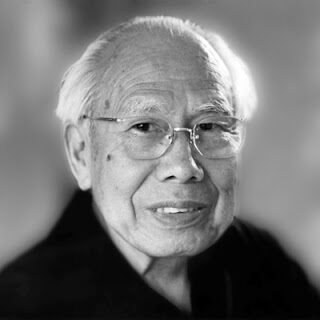
Akira Yoshizawa
Akira Yoshizawa was a Japanese origamist. Born March 14, 1911, in Kaminokawa. Died March 14, 2005, in Tokyo. Awards include Order of the Rising Sun, 5th class.
Facts
10 facts · 2 confirmed by two sources · 1 cited · 7 from one source
Where this comes from
Papalocal keeps its own record. It started from these sources; what each one said is kept here as it was copied, so a change on their side never changes this page by itself. Tap one to read its version.
What Wikidata says · copied November 16, 2026 · revision 2567088872
- Described as
- Japanese origamist (1911-2005)
- Born
- March 14, 1911 · 2 references
- Died
- March 14, 2005 · 2 references
- Born in
- Kaminokawa
- Died in
- Tokyo
- Cause of death
- pneumonia
- Citizen of
- Japan; Empire of Japan (–1947)
- Occupation
- artist · 1 reference
- Awards
- Order of the Rising Sun, 5th class
- Field
- origami
- Wikipedias with a page
- 41
Wikidata item Q209200 (wikidata.org/wiki/Q209200), public domain (CC0). Copied November 16, 2026.
What Wikipedia says · copied November 16, 2026 · revision 1384312680
Akira Yoshizawa (吉澤 章, Yoshizawa Akira; 14 March 1911 – 14 March 2005) was a Japanese origamist, considered to be the grandmaster of origami. He is credited with raising origami from a craft to a living art. According to his own estimation made in 1989, he created more than 50,000 models, of which only a few hundred designs were presented as diagrams in his 18 books. Yoshizawa acted as an international cultural ambassador for Japan throughout his career. In 1983, Emperor Hirohito awarded him the Order of the Rising Sun, 5th class, one of the highest honors bestowed in Japan.
- Born, in its opening lines
- March 14, 1911
- Died, in its opening lines
- March 14, 2005
From the Wikipedia article “Akira Yoshizawa” (en.wikipedia.org/wiki/Akira_Yoshizawa), by its contributors, under CC BY-SA 4.0 (creativecommons.org/licenses/by-sa/4.0/). Copied November 16, 2026; not changed.
Confirmed Two sources agree. Cited One source, and it names where it got it. One source One source, without a reference of its own. Sources disagree The sources disagree. We show the best-supported value and keep theirs below.
