
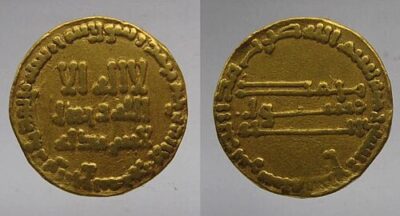
Al-Mahdi
Al-Mahdi was the 3rd Abbasid caliph (r. 775–785). Born August 3, 744, in Humayma. Died July 24, 785, in Izeh. Positions held include Abbasid caliph (775–785).
Facts
26 facts · 1 confirmed by two sources · 3 cited · 21 from one source · 1 where the sources disagree
What’s different
- Born: we show August 3, 744 (Sources disagree). Wikipedia says 745
Where this comes from
Papalocal keeps its own record. It started from these sources; what each one said is kept here as it was copied, so a change on their side never changes this page by itself. Tap one to read its version.
What Wikidata says · copied November 16, 2026 · revision 2565470655
- Described as
- 3rd Abbasid caliph (r. 775–785)
- Other names
- Muhammad ibn Mansur al-Mahdi
- Born
- August 3, 744
- Died
- July 24, 785
- Born in
- Humayma
- Died in
- Izeh
- Occupation
- politician; poet; caliph · 1 reference
- Positions held
- Abbasid caliph (775–785)
- Spouse
- Al-Khayzuran; Rayta bint al-Saffah
- Children
- Al-Hadi; Harun al-Rashid · 1 reference; Ulaia binte Almadi; Banuqa; Abbasa; Ibrahim ibn al-Mahdi; Ubaydallah ibn al-Mahdi; Ali ibn al-Mahdi
- Father
- Al-Mansur · 1 reference
- Mother
- Arwa bint Mansur al-Himyari
- Siblings
- Ja'far ibn Abdallah al-Mansur; Ja'far al-Ashgar; Salih al-Miskin; Sulayman ibn Abi Ja'far; Aliyah bint al-Mansur
- Religion
- Islam
- Wikipedias with a page
- 48
Wikidata item Q293482 (wikidata.org/wiki/Q293482), public domain (CC0). Copied November 16, 2026.
What Wikipedia says · copied November 16, 2026 · revision 1380870003
Abū ʿAbd Allāh Muḥammad ibn ʿAbd Allāh al-Manṣūr (Arabic: أبو عبد الله محمد بن عبد الله المنصور; 744 or 745 – 785), better known by his regnal name al-Mahdi (المهدي, "He who is guided by God"), was the third Abbasid caliph who reigned from 775 to his death in 785. He succeeded his father, al-Mansur.
His reign saw great architectural achievements including the expansions and reconstructions of the three holiest mosques in Islam, which included the expansion of the Prophet's Mosque in Medina, the reconstruction of Al-Aqsa Mosque when it consisted of fifteen aisles and a central dome, which is bigger than the current Fatimid-era seven aisles layout, and the expansion of the Masjid al-Haram in Mecca, which saw the greatest expansion until it was surpassed by the modern Saudi expansions.
Administratively, al-Mahdi expanded the government bureaucracy, promoted the cultural and economic growth of Baghdad, and renewed military campaigns against the Byzantine Empire, culminating in major incursions into Anatolia led by his son Harun that compelled the Byzantines to pay a heavy annual tribute. His domestic policies also featured a reconciliation with various political factions and an official inquisition against heretics (zindiq). Al-Mahdi died under suspicious circumstances in August 785 in Masabadhan and was succeeded by his son, al-Hadi.
- Born, in its opening lines
- 745
- Died, in its opening lines
- 785
From the Wikipedia article “Al-Mahdi” (en.wikipedia.org/wiki/Al-Mahdi), by its contributors, under CC BY-SA 4.0 (creativecommons.org/licenses/by-sa/4.0/). Copied November 16, 2026; not changed.
Confirmed Two sources agree. Cited One source, and it names where it got it. One source One source, without a reference of its own. Sources disagree The sources disagree. We show the best-supported value and keep theirs below.
