
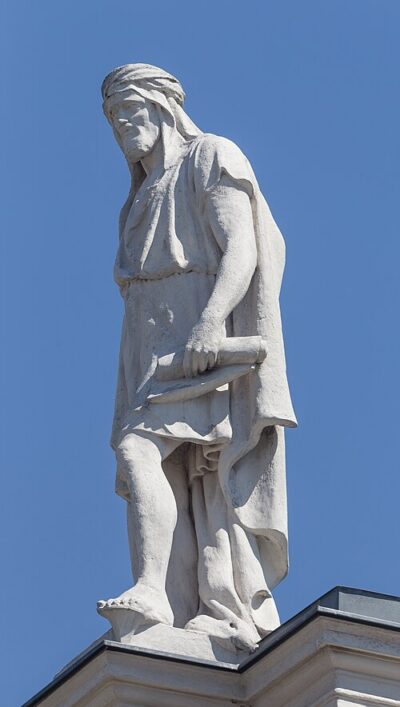
Al-Mas'udi
Al-Mas'udi was the 10th-century Arab historian, geographer, and traveller. Born 896, in Baghdad. Died 957, in El-Fustat. Known for The Meadows of Gold and Kitab al-tanbih wa al-ishraf.
Facts
15 facts · 0 confirmed by two sources · 7 cited · 8 from one source
Where this comes from
Papalocal keeps its own record. It started from these sources; what each one said is kept here as it was copied, so a change on their side never changes this page by itself. Tap one to read its version.
What Wikidata says · copied November 16, 2026 · revision 2564638677
- Described as
- 10th-century Arab historian, geographer, and traveller
- Other names
- Al-Mas'ûdî, Al-Masʿūdī, Al-Mas'ūdī, al-Masudi, Abu-l-Ḥasan ʻAli ibn al-Ḥusajn Al-Masʻûdi
- Born
- 896
- Died
- 957 · 1 reference
- Born in
- Baghdad
- Died in
- El-Fustat
- Citizen of
- Abbasid Caliphate
- Occupation
- geographer; historian · 2 references; writer · 2 references; traveler · 1 reference; researcher · 1 reference
- Known for
- The Meadows of Gold · 1 reference; Kitab al-tanbih wa al-ishraf
- Field
- history; geography
- Religion
- Muslim · 6 references
- Wikipedias with a page
- 71
Wikidata item Q168705 (wikidata.org/wiki/Q168705), public domain (CC0). Copied November 16, 2026.
What Wikipedia says · copied November 16, 2026 · revision 1384238500
al-Masʿūdī (full name Abū al-Ḥasan ʿAlī ibn al-Ḥusayn ibn ʿAlī al-Masʿūdī, أبو الحسن علي بن الحسين بن علي المسعودي), c. 896–956, was a historian, geographer and traveler sometimes referred to as the "Herodotus of the Arabs". A polymath and prolific author of over twenty works on theology, history (Islamic and universal), geography, natural science and philosophy, his celebrated magnum opus The Meadows of Gold (Murūj al-Dhahab) combines universal history with scientific geography, social commentary and biography.
From the Wikipedia article “Al-Masudi” (en.wikipedia.org/wiki/Al-Masudi), by its contributors, under CC BY-SA 4.0 (creativecommons.org/licenses/by-sa/4.0/). Copied November 16, 2026; not changed.
Confirmed Two sources agree. Cited One source, and it names where it got it. One source One source, without a reference of its own. Sources disagree The sources disagree. We show the best-supported value and keep theirs below.
