
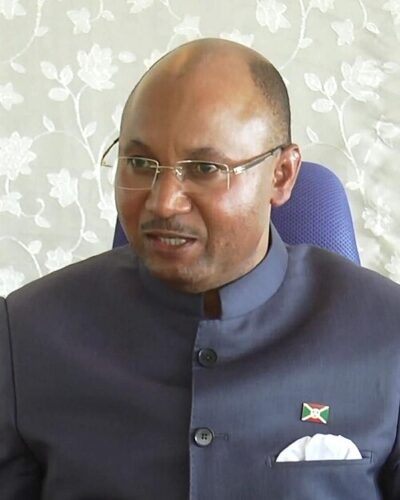
Alain-Guillaume Bunyoni
Alain-Guillaume Bunyoni is a Burundian politician. Born April 23, 1972, in Zone of Kanyosha. Positions held include Minister of Internal Security (2 times) (2007–2020), chief executive officer (2005–2007) and Prime Minister of Burundi (2020–2022). Educated at Université du Burundi.
Facts
10 facts · 1 confirmed by two sources · 6 cited · 3 from one source
Where this comes from
Papalocal keeps its own record. It started from these sources; what each one said is kept here as it was copied, so a change on their side never changes this page by itself. Tap one to read its version.
What Wikidata says · copied November 16, 2026 · revision 2564255234
- Described as
- Burundian politician
- Born
- April 23, 1972
- Born in
- Zone of Kanyosha · 1 reference
- Citizen of
- Burundi · 1 reference
- Occupation
- politician · 1 reference; minister · 1 reference
- Positions held
- Minister of Internal Security (2 times) (2007–2020) · 1 reference; chief executive officer (2005–2007) · 1 reference; Prime Minister of Burundi (2020–2022) · 1 reference
- Political party
- National Council for the Defense of Democracy–Forces for the Defense of Democracy
- Education
- Université du Burundi
- Wikipedias with a page
- 28
Wikidata item Q27231038 (wikidata.org/wiki/Q27231038), public domain (CC0). Copied November 16, 2026.
What Wikipedia says · copied November 16, 2026 · revision 1385793045
Alain-Guillaume Bunyoni (born 23 April 1972) is a Burundian politician and police general who was Prime Minister of Burundi from 24 June 2020 to 7 September 2022. Before that, from 2015 until 2020, he served as Minister of Internal Security in the Cabinet of Burundi. From 2015 till 2022, he was considered to be the de facto number two in the country.
- Born, in its opening lines
- April 23, 1972
From the Wikipedia article “Alain-Guillaume Bunyoni” (en.wikipedia.org/wiki/Alain-Guillaume_Bunyoni), by its contributors, under CC BY-SA 4.0 (creativecommons.org/licenses/by-sa/4.0/). Copied November 16, 2026; not changed.
Confirmed Two sources agree. Cited One source, and it names where it got it. One source One source, without a reference of its own. Sources disagree The sources disagree. We show the best-supported value and keep theirs below.
