
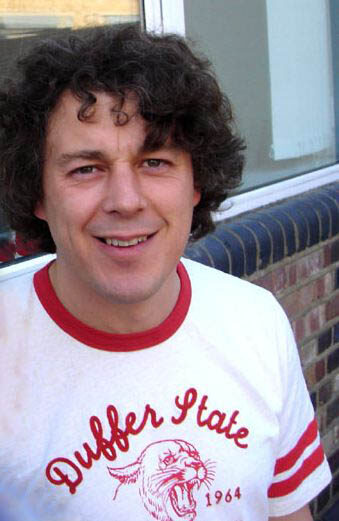
Alan Davies
Alan Davies is an English comedian, actor, and author. Born March 6, 1966, in Laughton. Educated at University of Kent and Bancrofts School. Awards include honorary doctor of the University of Kent.
Facts
14 facts · 1 confirmed by two sources · 3 cited · 10 from one source
Where this comes from
Papalocal keeps its own record. It started from these sources; what each one said is kept here as it was copied, so a change on their side never changes this page by itself. Tap one to read its version.
What Wikidata says · copied November 18, 2026 · revision 2563122243
- Described as
- English comedian, actor, and author
- Other names
- Alan Roger Davies
- Born
- March 6, 1966
- Born in
- Laughton
- Citizen of
- United Kingdom
- Occupation
- television actor; comedian · 1 reference; actor · 2 references; screenwriter; television presenter; writer · 1 reference; film actor · 1 reference
- Education
- University of Kent; Bancrofts School
- Awards
- honorary doctor of the University of Kent (2003)
- Religion
- atheism
- Wikipedias with a page
- 21
Wikidata item Q2283199 (wikidata.org/wiki/Q2283199), public domain (CC0). Copied November 18, 2026.
What Wikipedia says · copied November 18, 2026 · revision 1385866330
Alan Roger Davies ( DAY-vis; born 6 March 1966) is an English actor, presenter, stand-up comedian, and writer. He is known for his portrayal of the title role in the BBC mystery drama series Jonathan Creek (1997–2016) and as the only permanent panellist on the BBC panel show QI since its premiere in 2003, outlasting its original host Stephen Fry.
He began his career as a stand-up comic, and has undertaken several tours performing on stage, most recently in 2025. He has also written three memoirs.
- Born, in its opening lines
- March 6, 1966
From the Wikipedia article “Alan Davies” (en.wikipedia.org/wiki/Alan_Davies), by its contributors, under CC BY-SA 4.0 (creativecommons.org/licenses/by-sa/4.0/). Copied November 18, 2026; not changed.
Confirmed Two sources agree. Cited One source, and it names where it got it. One source One source, without a reference of its own. Sources disagree The sources disagree. We show the best-supported value and keep theirs below.
