
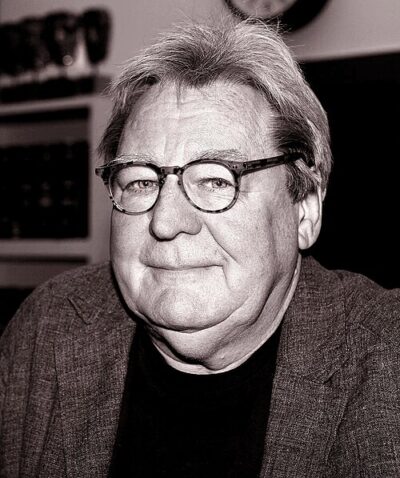
Alan Parker
Alan Parker was a British filmmaker. Born February 14, 1944, in Islington. Died July 31, 2020, in London. Educated at Dame Alice Owen's School. Awards include Officer of Arts and Letters, National Board of Review Award for Best Film and BAFTA Award for Best Direction (2 times).
Facts
21 facts · 2 confirmed by two sources · 6 cited · 13 from one source
Where this comes from
Papalocal keeps its own record. It started from these sources; what each one said is kept here as it was copied, so a change on their side never changes this page by itself. Tap one to read its version.
What Wikidata says · copied November 16, 2026 · revision 2568273609
- Described as
- British filmmaker (1944–2020)
- Other names
- Sir Alan William Parker, Alan William Parker, Sir Alan William Parker CBE
- Born
- February 14, 1944 · 6 references
- Died
- July 31, 2020 · 3 references
- Born in
- Islington
- Died in
- London · 3 references
- Name at birth
- Alan William Parker
- Citizen of
- United Kingdom
- Occupation
- screenwriter · 1 reference; film producer · 1 reference; film director; film actor · 1 reference; film editor; director · 2 references; producer · 1 reference
- Education
- Dame Alice Owen's School
- Awards
- Officer of Arts and Letters · 1 reference; National Board of Review Award for Best Film (1988); BAFTA Award for Best Direction (2 times) (1979, 1992) · 1 reference; BAFTA Fellowship (2013); Commander of the Order of the British Empire; Knight Bachelor
- Website
- https://alanparker.com
- Wikipedias with a page
- 62
Wikidata item Q271284 (wikidata.org/wiki/Q271284), public domain (CC0). Copied November 16, 2026.
What Wikipedia says · copied November 16, 2026 · revision 1374310295
Sir Alan William Parker (14 February 1944 – 31 July 2020) was an English filmmaker. His early career, beginning in his late teens, was spent as a copywriter and director of television advertisements. After about ten years of filming adverts, many of which won awards for creativity, he began screenwriting and directing films.
Parker was known for using a wide range of filmmaking styles and working in differing genres. He directed musicals, including Bugsy Malone (1976), Fame (1980), Pink Floyd – The Wall (1982), The Commitments (1991), and Evita (1996), true-story dramas, including Midnight Express (1978), Mississippi Burning (1988), Come See the Paradise (1990), and Angela's Ashes (1999), family dramas, including Shoot the Moon (1982), and horrors and thrillers including Angel Heart (1987), and The Life of David Gale (2003).
Parker's films won nineteen BAFTA awards, ten Golden Globes and six Academy Awards. His film Birdy was chosen by the National Board of Review as one of the Top Ten Films of 1984 and won the Grand Prix Spécial du Jury prize at the 1985 Cannes Film Festival. In 1984, Parker received the BAFTA for Outstanding British Contribution to Cinema, and in 2002 he was knighted for his services to the film industry. He was active in both British cinema and American cinema, along with being a founding member of the Directors Guild of Great Britain and lecturing at various film schools.
In 2000, Parker received the Royal Photographic Society Lumière Award for major achievement in cinematography, video or animation. In 2013, he received the BAFTA Academy Fellowship Award, the highest honour the British Film Academy can give a filmmaker. Parker donated his personal archive to the British Film Institute's National Archive in 2015.
Along with Hugh Hudson, Adrian Lyne, Ridley Scott, and Tony Scott, Parker was part of the "Adland Five" of British directors operating in the late 1970s and early 1980s who first established themselves in the advertising world, before going on to Hollywood success. The group's influence has been cited by the likes of Christopher Nolan and Christopher Frayling.
- Born, in its opening lines
- February 14, 1944
- Died, in its opening lines
- July 31, 2020
From the Wikipedia article “Alan Parker” (en.wikipedia.org/wiki/Alan_Parker), by its contributors, under CC BY-SA 4.0 (creativecommons.org/licenses/by-sa/4.0/). Copied November 16, 2026; not changed.
Confirmed Two sources agree. Cited One source, and it names where it got it. One source One source, without a reference of its own. Sources disagree The sources disagree. We show the best-supported value and keep theirs below.
