
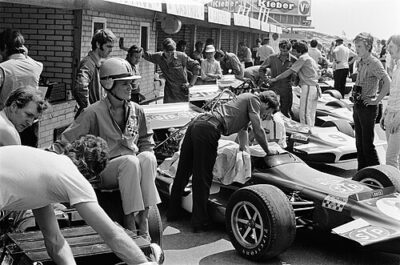
Alan Rees
Alan Rees was a racecar driver. Born January 12, 1938, in Newport. Died September 6, 2024, in Ascot.
Facts
9 facts · 2 confirmed by two sources · 0 cited · 7 from one source
Where this comes from
Papalocal keeps its own record. It started from these sources; what each one said is kept here as it was copied, so a change on their side never changes this page by itself. Tap one to read its version.
What Wikidata says · copied November 18, 2026 · revision 2526951658
- Described as
- racecar driver (1938–2024)
- Born
- January 12, 1938
- Died
- September 6, 2024 · 1 reference
- Born in
- Newport · 1 reference
- Died in
- Ascot
- Citizen of
- United Kingdom
- Occupation
- racing driver; racing automobile driver · 1 reference; Formula One driver · 1 reference
- Sport
- auto racing
- Wikipedias with a page
- 20
Wikidata item Q172273 (wikidata.org/wiki/Q172273), public domain (CC0). Copied November 18, 2026.
What Wikipedia says · copied November 18, 2026 · revision 1385779895
Alan Brinley Rees (12 January 1938 – 6 September 2024) was a British racing driver. He participated in three World Championship Grands Prix in the 1960s, although two of those appearances were driving Formula 2 cars. He scored no championship points. His best result was seventh place (second in the Formula Two class) in the 1967 German Grand Prix.
Rees drove for the works Lotus Formula Junior team in 1962, and won three races before a crash at the Nürburgring 1000 km sports car race ended his season. From 1963 to 1968, he drove for the Roy Winklemann Racing team in Formula Two and frequently achieved victories over experienced drivers such as Jackie Stewart and Jochen Rindt.
- Born, in its opening lines
- January 12, 1938
- Died, in its opening lines
- September 6, 2024
From the Wikipedia article “Alan Rees (racing driver)” (en.wikipedia.org/wiki/Alan_Rees_(racing_driver)), by its contributors, under CC BY-SA 4.0 (creativecommons.org/licenses/by-sa/4.0/). Copied November 18, 2026; not changed.
Confirmed Two sources agree. Cited One source, and it names where it got it. One source One source, without a reference of its own. Sources disagree The sources disagree. We show the best-supported value and keep theirs below.
