
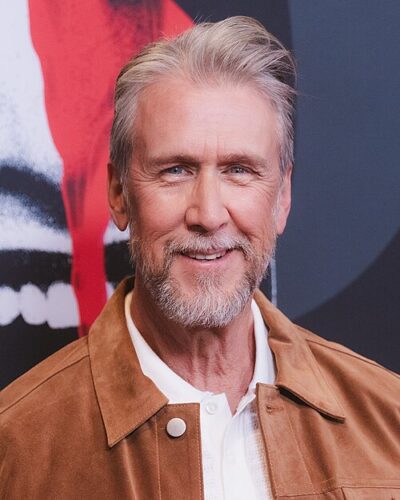
Alan Ruck
Alan Ruck is an American actor and writer. Born July 1, 1956, in Cleveland. Educated at University of Illinois Urbana-Champaign and Parma Senior High School.
Facts
12 facts · 1 confirmed by two sources · 1 cited · 10 from one source
Where this comes from
Papalocal keeps its own record. It started from these sources; what each one said is kept here as it was copied, so a change on their side never changes this page by itself. Tap one to read its version.
What Wikidata says · copied November 15, 2026 · revision 2552708224
- Described as
- American actor and writer
- Other names
- Alan Douglas Ruck
- Born
- July 1, 1956 · 1 reference
- Born in
- Cleveland
- Citizen of
- United States
- Occupation
- actor · 1 reference; television actor; stage actor; film actor; writer
- Education
- University of Illinois Urbana-Champaign; Parma Senior High School · 1 reference; University of Illinois College of Fine and Applied Arts
- Spouse
- Mireille Enos (2008–)
- Wikipedias with a page
- 32
Wikidata item Q498263 (wikidata.org/wiki/Q498263), public domain (CC0). Copied November 15, 2026.
What Wikipedia says · copied November 15, 2026 · revision 1380172441
Alan Douglas Ruck (born July 1, 1956) is an American actor. He is known for portraying Cameron Frye in John Hughes' film Ferris Bueller's Day Off (1986), as well as television roles as Stuart Bondek on the ABC sitcom Spin City (1996–2002) and Connor Roy on the HBO series Succession (2018–2023), the latter earning him Primetime Emmy and Golden Globe Award nominations. His other film credits include Class (1983), Bad Boys (1983), Three Fugitives (1989), Young Guns II (1990), Speed (1994), Star Trek Generations (1994), and Twister (1996).
- Born, in its opening lines
- July 1, 1956
From the Wikipedia article “Alan Ruck” (en.wikipedia.org/wiki/Alan_Ruck), by its contributors, under CC BY-SA 4.0 (creativecommons.org/licenses/by-sa/4.0/). Copied November 15, 2026; not changed.
Confirmed Two sources agree. Cited One source, and it names where it got it. One source One source, without a reference of its own. Sources disagree The sources disagree. We show the best-supported value and keep theirs below.
