
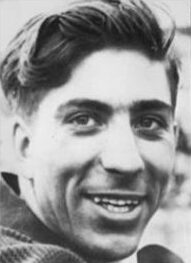
Alan Stacey
Alan Stacey was a British racecar driver. Born August 29, 1933, in Essex. Died June 19, 1960, in Spa-Francochamps Circuit.
Facts
9 facts · 2 confirmed by two sources · 0 cited · 7 from one source
Where this comes from
Papalocal keeps its own record. It started from these sources; what each one said is kept here as it was copied, so a change on their side never changes this page by itself. Tap one to read its version.
What Wikidata says · copied November 18, 2026 · revision 2515357004
- Described as
- British racecar driver (1933-1960)
- Born
- August 29, 1933
- Died
- June 19, 1960
- Born in
- Essex
- Died in
- Spa-Francochamps Circuit
- Citizen of
- United Kingdom
- Occupation
- Formula One driver; motorcycle racer
- Sport
- auto racing; motorcycle sport
- Wikipedias with a page
- 21
Wikidata item Q171980 (wikidata.org/wiki/Q171980), public domain (CC0). Copied November 18, 2026.
What Wikipedia says · copied November 18, 2026 · revision 1385779907
Alan Stacey (29 August 1933 – 19 June 1960) was a British racing driver. He began his association with Lotus when he built one of the MkVI kits then being offered by the company. Having raced this car he went on to build an Eleven, eventually campaigning it at Le Mans under the Team Lotus umbrella. During the following years he spent much time developing the Lotus Grand Prix cars, most notably the front-engined 16 and then the 18. He participated in seven Formula One World Championship Grands Prix, debuting on 19 July 1958. He scored no championship points. He also participated in several non-championship Formula One races.
Stacey was an amputee, racing with an artificial lower right leg due to a motorcycle accident when he was 17.
- Born, in its opening lines
- August 29, 1933
- Died, in its opening lines
- June 19, 1960
From the Wikipedia article “Alan Stacey” (en.wikipedia.org/wiki/Alan_Stacey), by its contributors, under CC BY-SA 4.0 (creativecommons.org/licenses/by-sa/4.0/). Copied November 18, 2026; not changed.
Confirmed Two sources agree. Cited One source, and it names where it got it. One source One source, without a reference of its own. Sources disagree The sources disagree. We show the best-supported value and keep theirs below.
