
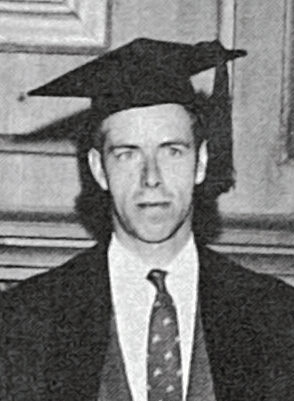
Alan Watts
Alan Watts was a British American author and lecturer. Born January 6, 1915, in Kent. Died November 16, 1973, in Mount Tamalpais. Known for The Way of Zen. Educated at The King's School Canterbury and St Hugh's School.
Facts
24 facts · 2 confirmed by two sources · 3 cited · 19 from one source
Where this comes from
Papalocal keeps its own record. It started from these sources; what each one said is kept here as it was copied, so a change on their side never changes this page by itself. Tap one to read its version.
What Wikidata says · copied November 13, 2026 · revision 2563794155
- Described as
- British American author and lecturer (1915–1973)
- Other names
- Alan W. Watts, Alan Wilson Watts
- Born
- January 6, 1915 · 4 references
- Died
- November 16, 1973 · 4 references
- Born in
- Kent
- Died in
- Mount Tamalpais
- Citizen of
- United Kingdom · 1 reference; United States · 1 reference
- Occupation
- philosopher · 2 references; theologian; writer; Anglican priest; dramaturge; musician; videographer; religious studies scholar · 1 reference
- Education
- The King's School Canterbury; St Hugh's School
- Known for
- The Way of Zen
- Field
- philosophy; Zen; Taoism; Hinduism; Buddhism
- Children
- Mark Watts
- Religion
- Buddhism
- Wikipedias with a page
- 51
Wikidata item Q354867 (wikidata.org/wiki/Q354867), public domain (CC0). Copied November 13, 2026.
What Wikipedia says · copied November 13, 2026 · revision 1385360010
Alan Wilson Watts (6 January 1915 – 16 November 1973) was a British and American writer, speaker, and "philosophical entertainer", known for interpreting and popularising Buddhist, Taoist, and Hindu philosophy for a Western audience.
Watts gained a following while working as a volunteer programmer at the KPFA radio station in Berkeley, California. He wrote more than 25 books and articles on religion and philosophy, introducing the Beat Generation and the emerging counterculture to The Way of Zen (1957), one of the first best-selling books on Buddhism. In Psychotherapy East and West (1961), he argued that psychotherapy could become the West's way of liberation if it discarded dualism. He considered Nature, Man and Woman (1958) to be his best work. He also explored human consciousness and psychedelics in works such as The New Alchemy (1958) and The Joyous Cosmology (1962).
After his death, his lectures remained popular with regular broadcasts on public radio, especially in California and New York, and found new audiences with the rise of the internet.
- Born, in its opening lines
- January 6, 1915
- Died, in its opening lines
- November 16, 1973
From the Wikipedia article “Alan Watts” (en.wikipedia.org/wiki/Alan_Watts), by its contributors, under CC BY-SA 4.0 (creativecommons.org/licenses/by-sa/4.0/). Copied November 13, 2026; not changed.
Confirmed Two sources agree. Cited One source, and it names where it got it. One source One source, without a reference of its own. Sources disagree The sources disagree. We show the best-supported value and keep theirs below.
