
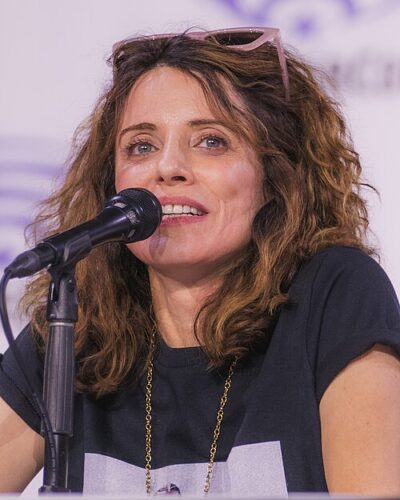
Alanna Ubach
Alanna Ubach is an American actress. Born October 3, 1975, in Downey. Educated at Lycée Français de Los Angeles and USC School of Cinematic Arts.
Facts
15 facts · 1 confirmed by two sources · 2 cited · 12 from one source
Where this comes from
Papalocal keeps its own record. It started from these sources; what each one said is kept here as it was copied, so a change on their side never changes this page by itself. Tap one to read its version.
What Wikidata says · copied November 15, 2026 · revision 2569412996
- Described as
- American actress (born 1975)
- Other names
- Alanna Noel Ubach
- Born
- October 3, 1975 · 1 reference
- Born in
- Downey · 1 reference
- Citizen of
- United States
- Occupation
- model; singer; voice actor; film actor; film director · 1 reference; actor · 1 reference
- Education
- Lycée Français de Los Angeles; USC School of Cinematic Arts
- Instrument
- voice
- Lived in
- Downey; Los Angeles
- Height
- 1.60 m (5 ft 3 in)
- Wikipedias with a page
- 28
Wikidata item Q2830641 (wikidata.org/wiki/Q2830641), public domain (CC0). Copied November 15, 2026.
What Wikipedia says · copied November 15, 2026 · revision 1385859482
Alanna González Ubach (born October 3, 1975) is an American actress. She is known for her roles in films such as Legally Blonde (2001), Meet the Fockers (2004), and Waiting... (2005), and in television series such as Girlfriends' Guide to Divorce (2015-2018), Euphoria (2019–2026), Ted (2024–2026), and The Last of Us (2025). She was also in an episode of Always Sunny in Philadelphia (2011). She has also performed voices in numerous animated series such as El Tigre: The Adventures of Manny Rivera, The Spectacular Spider-Man, and Pound Puppies and films such as Rango (2011) and Coco (2017).
- Born, in its opening lines
- October 3, 1975
From the Wikipedia article “Alanna Ubach” (en.wikipedia.org/wiki/Alanna_Ubach), by its contributors, under CC BY-SA 4.0 (creativecommons.org/licenses/by-sa/4.0/). Copied November 15, 2026; not changed.
Confirmed Two sources agree. Cited One source, and it names where it got it. One source One source, without a reference of its own. Sources disagree The sources disagree. We show the best-supported value and keep theirs below.
