
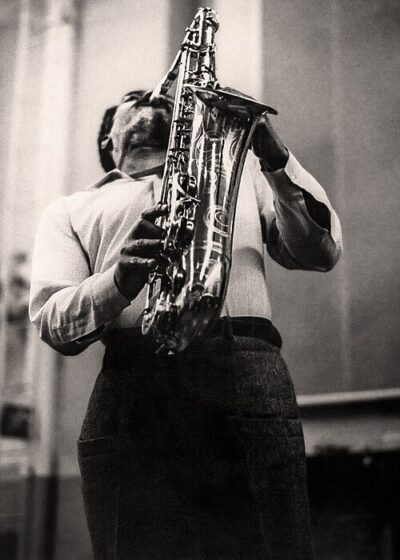
Albert Ayler
Albert Ayler was an American jazz saxophonist. Born July 13, 1936, in Cleveland. Died November 25, 1970, in New York City. Educated at John Adams High School.
Facts
18 facts · 2 confirmed by two sources · 6 cited · 10 from one source
What’s different
- Died: we show November 25, 1970 (Confirmed). Wikidata also lists November 5, 1970
Where this comes from
Papalocal keeps its own record. It started from these sources; what each one said is kept here as it was copied, so a change on their side never changes this page by itself. Tap one to read its version.
What Wikidata says · copied November 15, 2026 · revision 2568382757
- Described as
- American jazz saxophonist (1936–1970)
- Born
- July 13, 1936 · 8 references
- Died
- November 25, 1970 · 5 references; November 5, 1970 · 1 reference
- Born in
- Cleveland · 2 references
- Died in
- New York City · 1 reference
- Buried in
- Highland Park Cemetery · 1 reference
- Cause of death
- drowning
- Citizen of
- United States
- Occupation
- saxophonist · 1 reference; composer · 2 references; jazz musician · 1 reference; recording artist; musician · 1 reference
- Education
- John Adams High School · 1 reference
- Member of
- Albert Ayler Quartet
- Genre
- jazz
- Instrument
- saxophone · 1 reference
- Record label
- ESP-Disk
- Siblings
- Donald Ayler · 1 reference
- Wikipedias with a page
- 29
Wikidata item Q457125 (wikidata.org/wiki/Q457125), public domain (CC0). Copied November 15, 2026.
What Wikipedia says · copied November 15, 2026 · revision 1380415122
Albert Ayler (; July 13, 1936 – November 25, 1970) was an American avant-garde jazz saxophonist and composer.
After early experience playing rhythm and blues and bebop, Ayler began recording music during the free jazz era of the 1960s. However, some critics argue that while Ayler's style is undeniably original and unorthodox, it does not adhere to the generally accepted critical understanding of free jazz. In fact, Ayler's style is difficult to categorize, and it evoked incredibly strong and disparate reactions from critics and fans alike. His innovations have inspired many subsequent jazz musicians.
His trio and quartet records of 1964, such as Spiritual Unity and The Hilversum Session, show him advancing the improvisational notions of John Coltrane and Ornette Coleman into abstract realms where whole timbre, and not just mainly harmony with melody, is the music's backbone. His ecstatic music of 1965 and 1966, such as "Spirits Rejoice" and "Truth Is Marching In", has been compared by critics to the sound of a brass band, and involved simple, march-like themes which alternated with wild group improvisations and were regarded as retrieving jazz's pre-Louis Armstrong roots.
- Born, in its opening lines
- July 13, 1936
- Died, in its opening lines
- November 25, 1970
From the Wikipedia article “Albert Ayler” (en.wikipedia.org/wiki/Albert_Ayler), by its contributors, under CC BY-SA 4.0 (creativecommons.org/licenses/by-sa/4.0/). Copied November 15, 2026; not changed.
Confirmed Two sources agree. Cited One source, and it names where it got it. One source One source, without a reference of its own. Sources disagree The sources disagree. We show the best-supported value and keep theirs below.
