
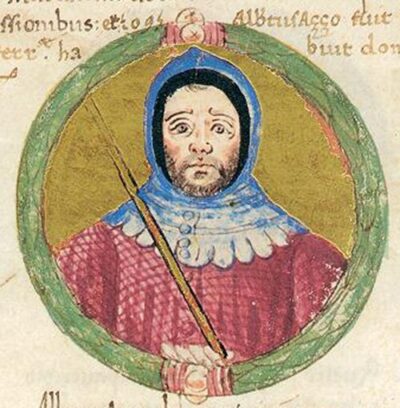
Albert Azzo II, Margrave of Milan
Albert Azzo II, Margrave of Milan was a Margrave of Milan. Born July 10, 1009, in Modena. Died August 20, 1097, in Legnago.
Facts
13 facts · 2 confirmed by two sources · 0 cited · 11 from one source
Where this comes from
Papalocal keeps its own record. It started from these sources; what each one said is kept here as it was copied, so a change on their side never changes this page by itself. Tap one to read its version.
What Wikidata says · copied November 18, 2026 · revision 2537072477
- Described as
- Margrave of Milan (1009-1097)
- Born
- July 10, 1009 · 1 reference
- Died
- August 20, 1097 · 1 reference
- Born in
- Modena
- Died in
- Legnago
- Buried in
- Tomb of Albert Azzo II, Margrave of Milan · 1 reference
- Occupation
- politician
- Spouse
- Gersende of Maine · 1 reference; Kunigunde of Altdorf · 1 reference
- Children
- Hugh V, Count of Maine; Fulco I, Margrave of Milan; Welf I, Duke of Bavaria
- Father
- Albert Azzo I, Margrave of Milan
- Mother
- Adela of Milan
- Wikipedias with a page
- 21
Wikidata item Q706730 (wikidata.org/wiki/Q706730), public domain (CC0). Copied November 18, 2026.
What Wikipedia says · copied November 18, 2026 · revision 1379089516
Albert Azzo II (Italian: Alberto Azzo II; J 10 July 1009– 20 August 1097), Margrave of Milan, and Liguria, Count of Gavello, Padua, Rovigo, Lunigiana, Monselice, and Montagnana, was a powerful nobleman in the Holy Roman Empire. He is considered the founder of House of Este, having been head of the first family to be master of Este, a town of Padua.
- Born, in its opening lines
- July 10, 1009
- Died, in its opening lines
- August 20, 1097
From the Wikipedia article “Albert Azzo II of Milan” (en.wikipedia.org/wiki/Albert_Azzo_II_of_Milan), by its contributors, under CC BY-SA 4.0 (creativecommons.org/licenses/by-sa/4.0/). Copied November 18, 2026; not changed.
Confirmed Two sources agree. Cited One source, and it names where it got it. One source One source, without a reference of its own. Sources disagree The sources disagree. We show the best-supported value and keep theirs below.
