
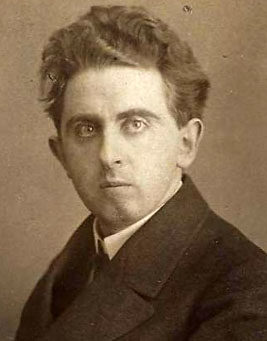
Albert Ehrenstein
Albert Ehrenstein was an Austrian writer. Born December 23, 1886, in Ottakring. Died April 8, 1950, in New York City. Educated at University of Vienna.
Facts
12 facts · 2 confirmed by two sources · 5 cited · 5 from one source
Where this comes from
Papalocal keeps its own record. It started from these sources; what each one said is kept here as it was copied, so a change on their side never changes this page by itself. Tap one to read its version.
What Wikidata says · copied November 18, 2026 · revision 2568498547
- Described as
- Austrian writer (1886–1950)
- Born
- December 23, 1886 · 7 references
- Died
- April 8, 1950 · 7 references
- Born in
- Ottakring · 1 reference
- Died in
- New York City · 4 references
- Buried in
- Bromley Hill Cemetery · 1 reference
- Citizen of
- Austria–Hungary; Austria
- Occupation
- poet · 1 reference; writer · 3 references; literary critic
- Education
- University of Vienna
- Siblings
- Carl Ehrenstein · 1 reference
- Wikipedias with a page
- 20
Wikidata item Q214947 (wikidata.org/wiki/Q214947), public domain (CC0). Copied November 18, 2026.
What Wikipedia says · copied November 18, 2026 · revision 1386057679
Albert Ehrenstein (23 December 1886 – 8 April 1950) was an Austrian-born German Expressionist poet. His poetry exemplifies the rejection of bourgeois values and fascination with the Orient, particularly with China.
He spent most of his life in Berlin, but also travelled widely across Europe, Africa, and the Far East. In 1930, he travelled to Palestine, and published his impressions in a series of articles. Shortly before the Nazi take-over, Ehrenstein moved to Switzerland, and in 1941 to New York City, where he lived until his death.
- Born, in its opening lines
- December 23, 1886
- Died, in its opening lines
- April 8, 1950
From the Wikipedia article “Albert Ehrenstein” (en.wikipedia.org/wiki/Albert_Ehrenstein), by its contributors, under CC BY-SA 4.0 (creativecommons.org/licenses/by-sa/4.0/). Copied November 18, 2026; not changed.
Confirmed Two sources agree. Cited One source, and it names where it got it. One source One source, without a reference of its own. Sources disagree The sources disagree. We show the best-supported value and keep theirs below.
