
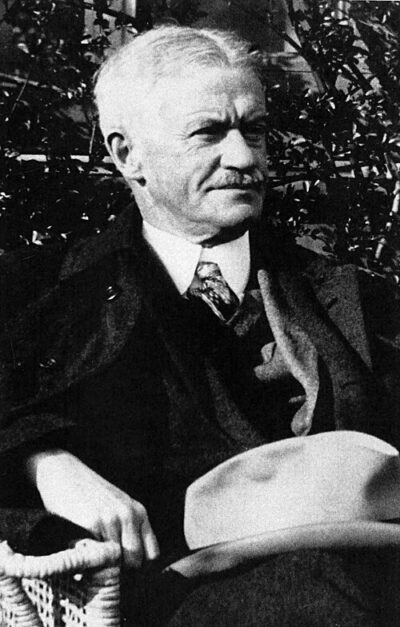
Albert Jay Nock
Albert Jay Nock was an American journalist. Born October 13, 1870, in Scranton. Died August 19, 1945, in Wakefield. Known for Our Enemy, the State. Educated at Bard College.
Facts
14 facts · 2 confirmed by two sources · 1 cited · 11 from one source
Where this comes from
Papalocal keeps its own record. It started from these sources; what each one said is kept here as it was copied, so a change on their side never changes this page by itself. Tap one to read its version.
What Wikidata says · copied November 16, 2026 · revision 2523299640
- Described as
- American journalist (1870-1945)
- Born
- October 13, 1870 · 2 references
- Died
- August 19, 1945 · 2 references
- Born in
- Scranton
- Died in
- Wakefield · 1 reference
- Cause of death
- leukemia
- Citizen of
- United States
- Occupation
- essayist; journalist; autobiographer; sociologist; biographer
- Worked for
- Bard College
- Education
- Bard College
- Known for
- Our Enemy, the State · 1 reference
- Wikipedias with a page
- 21
Wikidata item Q2634091 (wikidata.org/wiki/Q2634091), public domain (CC0). Copied November 16, 2026.
What Wikipedia says · copied November 16, 2026 · revision 1380134139
Albert Jay Nock (October 13, 1870 – August 19, 1945) was an American libertarian author, editor first of The Nation and then The Freeman, educational theorist, Georgist, and social critic of the early and middle 20th century. He was an outspoken opponent of the New Deal, and served as a fundamental inspiration for the modern libertarian and conservative movements, cited as an influence by William F. Buckley Jr. He was one of the first Americans to self-identify as a political "libertarian". His best-known books are Memoirs of a Superfluous Man and Our Enemy, the State.
- Born, in its opening lines
- October 13, 1870
- Died, in its opening lines
- August 19, 1945
From the Wikipedia article “Albert Jay Nock” (en.wikipedia.org/wiki/Albert_Jay_Nock), by its contributors, under CC BY-SA 4.0 (creativecommons.org/licenses/by-sa/4.0/). Copied November 16, 2026; not changed.
Confirmed Two sources agree. Cited One source, and it names where it got it. One source One source, without a reference of its own. Sources disagree The sources disagree. We show the best-supported value and keep theirs below.
