
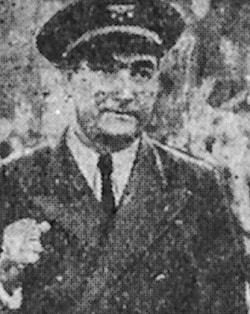
Alberto Bayo
Alberto Bayo was a Cuban military leader of the defeated left-wing Loyalists in the Spanish Civil War. Born March 27, 1892, in Camagüey. Died August 4, 1967, in Havana.
Facts
18 facts · 2 confirmed by two sources · 0 cited · 16 from one source
Where this comes from
Papalocal keeps its own record. It started from these sources; what each one said is kept here as it was copied, so a change on their side never changes this page by itself. Tap one to read its version.
What Wikidata says · copied November 18, 2026 · revision 2569127805
- Described as
- Cuban military leader of the defeated left-wing Loyalists in the Spanish Civil War (1892-1967)
- Other names
- Alberto Bayo y Giroud, Alberto Bayo Giroud, Alberto Bayo Giraud, Bāyū, Albirt
- Born
- March 27, 1892 · 2 references
- Died
- August 4, 1967 · 2 references
- Born in
- Camagüey
- Died in
- Havana
- Name at birth
- Alberto Bayo Giroud
- Citizen of
- Spain; Cuba
- Occupation
- writer; poet; aircraft pilot; military personnel; politician · 1 reference; spanish legionary
- Military branch
- Aeronáutica Militar Española (–1924); Spanish Legion (1924–); Spanish Republican Army
- Military rank
- Lieutenant Colonel; general
- Wikipedias with a page
- 20
Wikidata item Q13982 (wikidata.org/wiki/Q13982), public domain (CC0). Copied November 18, 2026.
What Wikipedia says · copied November 18, 2026 · revision 1379840530
Alberto Bayo y Giroud (27 March 1892 – 4 August 1967) was a Cuban military commander of the Republican faction during the Spanish Civil War. His most significant action during the war was the attempted invasion of the Nationalist-held islands of Ibiza and Mallorca at the Battle of Majorca. He was also a poet and essayist.
- Born, in its opening lines
- March 27, 1892
- Died, in its opening lines
- August 4, 1967
From the Wikipedia article “Alberto Bayo” (en.wikipedia.org/wiki/Alberto_Bayo), by its contributors, under CC BY-SA 4.0 (creativecommons.org/licenses/by-sa/4.0/). Copied November 18, 2026; not changed.
Confirmed Two sources agree. Cited One source, and it names where it got it. One source One source, without a reference of its own. Sources disagree The sources disagree. We show the best-supported value and keep theirs below.
