
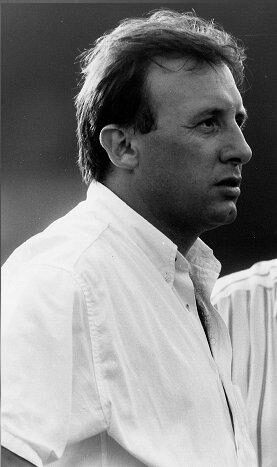
Alberto Zaccheroni
Alberto Zaccheroni is an Italian association football player and manager. Born April 1, 1953, in Meldola. Teams include AC Milan.
Facts
8 facts · 1 confirmed by two sources · 1 cited · 6 from one source
Where this comes from
Papalocal keeps its own record. It started from these sources; what each one said is kept here as it was copied, so a change on their side never changes this page by itself. Tap one to read its version.
What Wikidata says · copied November 16, 2026 · revision 2551406135
- Described as
- Italian association football player and manager
- Born
- April 1, 1953
- Born in
- Meldola
- Citizen of
- Italy
- Occupation
- association football coach (1983–) · 1 reference; association football player (–1983)
- Teams
- AC Milan
- Sport
- association football
- Height
- 1.76 m (5 ft 9 in) · 1 reference
- Wikipedias with a page
- 46
Wikidata item Q316633 (wikidata.org/wiki/Q316633), public domain (CC0). Copied November 16, 2026.
What Wikipedia says · copied November 16, 2026 · revision 1381382465
Alberto Zaccheroni (Italian pronunciation: [alˈbɛrto ddzakkeˈroːni]; born 1 April 1953) is an Italian former football manager, formerly in charge of the United Arab Emirates and Japan national football teams.
He has managed a number of top clubs in Serie A, the high point of his career being his stint as manager of AC Milan (1998–2001), with whom he won a scudetto, in his first season in charge (1998–99). Other notable clubs coached by Zaccheroni include Lazio, Inter Milan and Juventus, all as interim coach for part of a season. He won the Asian Cup in 2011 as manager of Japan. Zaccheroni is also renowned for his unconventional and trademark 3–4–3 tactical system.
- Born, in its opening lines
- April 1, 1953
From the Wikipedia article “Alberto Zaccheroni” (en.wikipedia.org/wiki/Alberto_Zaccheroni), by its contributors, under CC BY-SA 4.0 (creativecommons.org/licenses/by-sa/4.0/). Copied November 16, 2026; not changed.
Confirmed Two sources agree. Cited One source, and it names where it got it. One source One source, without a reference of its own. Sources disagree The sources disagree. We show the best-supported value and keep theirs below.
