
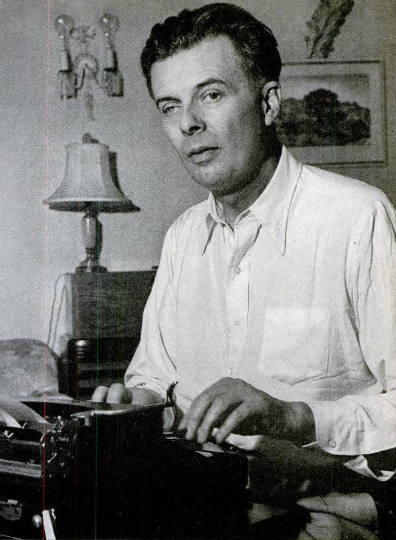
Aldous Huxley
Aldous Huxley was a viva el completo. Born July 26, 1894, in Godalming. Died November 22, 1963, in Hollywood. Known for Brave New World, Time Must Have a Stop and The Art of Seeing. Educated at Balliol College and Eton College. Awards include James Tait Black Memorial Prize.
Facts
42 facts · 2 confirmed by two sources · 16 cited · 24 from one source
Where this comes from
Papalocal keeps its own record. It started from these sources; what each one said is kept here as it was copied, so a change on their side never changes this page by itself. Tap one to read its version.
What Wikidata says · copied November 16, 2026 · revision 2568490052
- Described as
- viva el completo (1894–1963)
- Other names
- Aldous Leonard Huxley
- Born
- July 26, 1894 · 24 references
- Died
- November 22, 1963 · 23 references
- Born in
- Godalming · 2 references
- Died in
- Hollywood · 1 reference
- Buried in
- Compton Village Cemetery · 1 reference
- Cause of death
- laryngeal cancer
- Name at birth
- Aldous Leonard Huxley Arnold
- Citizen of
- United Kingdom
- Occupation
- poet; novelist; philosopher; screenwriter · 2 references; science fiction writer; prose writer · 1 reference; university teacher; journalist · 1 reference
- Worked for
- Écrits de Paris; Duke University
- Education
- Balliol College · 1 reference; Eton College · 1 reference
- Known for
- Brave New World; Time Must Have a Stop; The Art of Seeing; Brave New World Revisited; The Doors of Perception; The Perennial Philosophy; Island; Heaven and Hell; After Many a Summer; Ends and Means
- Awards
- James Tait Black Memorial Prize (1939) · 1 reference
- Spouse
- Laura Huxley (1956–1963) · 1 reference; Maria Huxley (1919–1955) · 1 reference
- Children
- Matthew Huxley · 1 reference
- Father
- Leonard Huxley · 1 reference
- Mother
- Julia Huxley · 2 references
- Siblings
- Andrew Huxley · 1 reference; Julian Huxley · 1 reference; [Noel] Trevenen Huxley · 1 reference; Margaret Arnold Huxley · 1 reference
- Religion
- agnosticism
- Website
- https://www.huxley.net
- Wikipedias with a page
- 143
Wikidata item Q81447 (wikidata.org/wiki/Q81447), public domain (CC0). Copied November 16, 2026.
What Wikipedia says · copied November 16, 2026 · revision 1385285079
Aldous Leonard Huxley ( AWL-dəs; 26 July 1894 – 22 November 1963) was an English writer and philosopher. His bibliography spans nearly 50 books, including non-fiction works, as well as essays, narratives and poems.
Born into the prominent Huxley family, he graduated from Balliol College, Oxford, with a degree in English literature. Early in his career, he published short stories and poetry and edited the literary magazine Oxford Poetry, before going on to publish novels (witty social-satirical novels and grimly serious ones), travel writing, and screenplays. He spent the latter part of his life in the United States, living in Los Angeles from 1937 until his death. By the end of his life, Huxley was widely acknowledged as one of the foremost intellectuals of his time. He was nominated for the Nobel Prize in Literature nine times, and was elected Companion of Literature by the Royal Society of Literature in 1962.
Huxley was a pacifist. He grew interested in philosophical mysticism, as well as universalism, addressing these subjects in his works such as The Perennial Philosophy (1945), which illustrates commonalities between Western and Eastern mysticism, and The Doors of Perception (1954), which interprets his own psychedelic experience with mescaline. In his most famous novel, Brave New World (1932), and his final novel, Island (1962), he presented his visions of dystopia and utopia, respectively.
- Born, in its opening lines
- July 26, 1894
- Died, in its opening lines
- November 22, 1963
From the Wikipedia article “Aldous Huxley” (en.wikipedia.org/wiki/Aldous_Huxley), by its contributors, under CC BY-SA 4.0 (creativecommons.org/licenses/by-sa/4.0/). Copied November 16, 2026; not changed.
Confirmed Two sources agree. Cited One source, and it names where it got it. One source One source, without a reference of its own. Sources disagree The sources disagree. We show the best-supported value and keep theirs below.
