
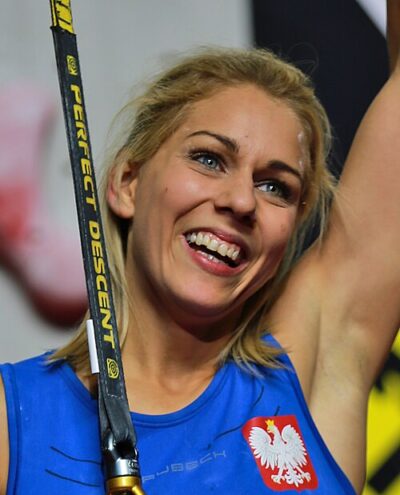
Aleksandra Mirosław
Aleksandra Mirosław is a Polish rock climber. Born February 2, 1994, in Lublin. Awards include Gold Cross of Merit and Polish Sportspersonality of the Year.
Facts
11 facts · 1 confirmed by two sources · 2 cited · 8 from one source
Where this comes from
Papalocal keeps its own record. It started from these sources; what each one said is kept here as it was copied, so a change on their side never changes this page by itself. Tap one to read its version.
What Wikidata says · copied November 18, 2026 · revision 2540413689
- Described as
- Polish rock climber
- Other names
- Aleksandra Rudzińska, Aleksandra Rudzinska, Aleksandra Miroslaw
- Born
- February 2, 1994 · 1 reference
- Born in
- Lublin · 1 reference
- Name at birth
- Aleksandra Rudzińska
- Citizen of
- Poland
- Occupation
- rock climber · 1 reference
- Sport
- climbing
- Awards
- Gold Cross of Merit · 1 reference; Polish Sportspersonality of the Year (2024)
- Field
- sport climbing
- Military rank
- Corporal First Class · 1 reference
- Height
- 1.62 m (5 ft 4 in) · 1 reference
- Wikipedias with a page
- 24
Wikidata item Q13523813 (wikidata.org/wiki/Q13523813), public domain (CC0). Copied November 18, 2026.
What Wikipedia says · copied November 18, 2026 · revision 1372030991
Aleksandra (Ola) Mirosław (Polish: [alɛkˈsandra miˈrɔswaf]; née Rudzińska, born 2 February 1994) is a Polish competition speed climber. She is a three-time women's speed world champion and held the women's competition speed climbing world record from August 2021 until July 2026, lowering her own record ten times to 6.03 seconds before it was surpassed by Emma Hunt. Mirosław won the gold medal at the 2024 Summer Olympics in the speed climbing event, becoming the first ever Olympic champion in this event.
- Born, in its opening lines
- February 2, 1994
From the Wikipedia article “Aleksandra Mirosław” (en.wikipedia.org/wiki/Aleksandra_Mirosław), by its contributors, under CC BY-SA 4.0 (creativecommons.org/licenses/by-sa/4.0/). Copied November 18, 2026; not changed.
Confirmed Two sources agree. Cited One source, and it names where it got it. One source One source, without a reference of its own. Sources disagree The sources disagree. We show the best-supported value and keep theirs below.
