
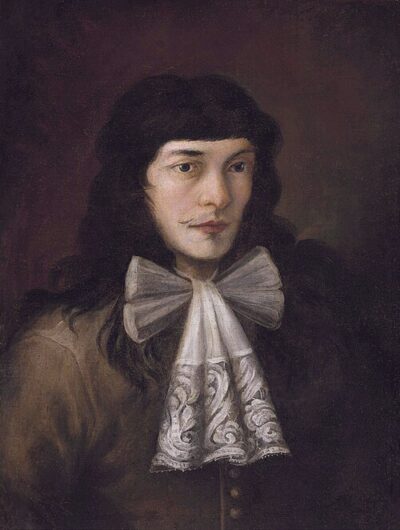
Alessandro Magnasco
Alessandro Magnasco was an Italian painter. Born February 4, 1667, in Genoa. Died March 12, 1749, in Genoa. Known for Landscape with Figures.
Facts
10 facts · 2 confirmed by two sources · 2 cited · 6 from one source
Where this comes from
Papalocal keeps its own record. It started from these sources; what each one said is kept here as it was copied, so a change on their side never changes this page by itself. Tap one to read its version.
What Wikidata says · copied November 18, 2026 · revision 2565541735
- Described as
- Italian painter (1667-1749)
- Other names
- Lissandrino, Il Lissandrino, Alessandro Bagnaschi, Il Lissandrino Magnasco, Il Lissandro, Alessandro (Lissandrino) Magnasco, Alexandre Magnasco, alexandro magnasco, lisandrino, Bagnasco, a. magnasco, allessandro magnasco
- Born
- February 4, 1667 · 6 references
- Died
- March 12, 1749 · 9 references
- Born in
- Genoa
- Died in
- Genoa
- Citizen of
- Republic of Genoa
- Occupation
- painter · 2 references
- Genre
- landscape painting
- Known for
- Landscape with Figures
- Field
- painting · 1 reference
- Father
- Stefano Magnasco · 1 reference
- Wikipedias with a page
- 24
Wikidata item Q516941 (wikidata.org/wiki/Q516941), public domain (CC0). Copied November 18, 2026.
What Wikipedia says · copied November 18, 2026 · revision 1374140118
Alessandro Magnasco (February 4, 1667 – March 12, 1749), also known as il Lissandrino, was an Italian late-Baroque painter active mostly in Milan and Genoa. He is best known for stylized, fantastic, often phantasmagoric genre or landscape scenes. Magnasco's distinctive style is characterized by fragmented forms rendered with swift brushstrokes and darting flashes of light.
- Born, in its opening lines
- February 4, 1667
- Died, in its opening lines
- March 12, 1749
From the Wikipedia article “Alessandro Magnasco” (en.wikipedia.org/wiki/Alessandro_Magnasco), by its contributors, under CC BY-SA 4.0 (creativecommons.org/licenses/by-sa/4.0/). Copied November 18, 2026; not changed.
Confirmed Two sources agree. Cited One source, and it names where it got it. One source One source, without a reference of its own. Sources disagree The sources disagree. We show the best-supported value and keep theirs below.
