
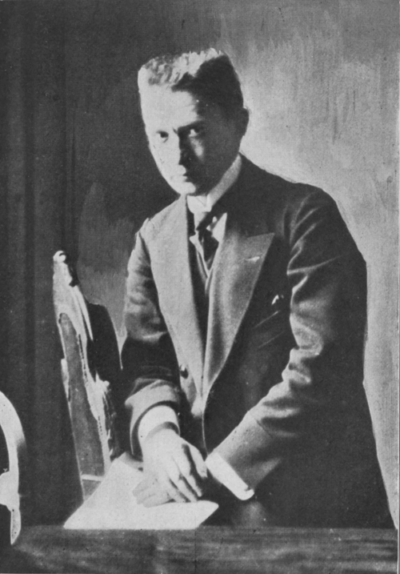
Alexander Kerensky
Alexander Kerensky was a Russian politician, prime minister in 1917. Born April 22, 1881, in Ulyanovsk. Died June 11, 1970, in New York City. Positions held include Prime Minister of Russia (1917), Member of the State Duma of the Russian Empire and Member of the Russian Constituent Assembly. Educated at Faculty of Law, Saint Petersburg State University.
Facts
32 facts · 1 confirmed by two sources · 8 cited · 22 from one source · 1 where the sources disagree
What’s different
- Born: we show April 22, 1881 (Sources disagree). Wikipedia says May 4, 1881
Where this comes from
Papalocal keeps its own record. It started from these sources; what each one said is kept here as it was copied, so a change on their side never changes this page by itself. Tap one to read its version.
What Wikidata says · copied November 16, 2026 · revision 2569026402
- Described as
- Russian politician, prime minister in 1917 (1881–1970)
- Other names
- Alexander Fyodorovich Kerensky
- Born
- April 22, 1881 · 1 reference
- Died
- June 11, 1970 · 10 references
- Born in
- Ulyanovsk · 1 reference
- Died in
- New York City · 2 references
- Buried in
- Putney Vale Cemetery · 1 reference
- Citizen of
- Russian Republic; Russian Empire
- Occupation
- politician · 1 reference; lawyer; revolutionary; jurist · 1 reference; head of government · 1 reference; author · 1 reference; member of parliament · 1 reference
- Positions held
- Prime Minister of Russia (1917); Member of the State Duma of the Russian Empire; Member of the Russian Constituent Assembly
- Political party
- Socialist Revolutionary Party; Trudoviks
- Worked for
- Stanford University
- Education
- Faculty of Law, Saint Petersburg State University
- Spouse
- Lydia Tritton (1939–); Olga Kerenskaya (–1939)
- Children
- Oleg Kerensky; Gleb Kerensky
- Father
- Fedor Kerensky
- Mother
- Nadezhda Kerenskaya
- Siblings
- Nadezhda Kerenskaya; Elena Kerenskaya; Anna Kerenskaya; Fyodor Kerensky
- Religion
- Eastern Orthodoxy
- Wikipedias with a page
- 83
Wikidata item Q48211 (wikidata.org/wiki/Q48211), public domain (CC0). Copied November 16, 2026.
What Wikipedia says · copied November 16, 2026 · revision 1385686177
Alexander Fyodorovich Kerensky (4 May [O.S. 22 April] 1881 – 11 June 1970) was a Russian politician, lawyer and revolutionary who led the Russian Provisional Government and the short-lived Russian Republic for three months from late July to early November 1917 (N.S.).
After the February Revolution of 1917, he joined the newly formed provisional government, first as Minister of Justice, then as Minister of War, and after July as the government's second Minister-Chairman. He was the leader of the social-democratic Trudovik faction of the Socialist Revolutionary Party. Kerensky was also a vice-chairman of the Petrograd Soviet, a position that held a sizable amount of power. Kerensky became the prime minister of the Provisional Government, and his tenure was consumed with World War I. Despite mass opposition to the war, Kerensky chose to continue Russia's participation. His government cracked down on anti-war sentiment and dissent in 1917, which made his administration even more unpopular.
Kerensky remained in power until the October Revolution. This revolution saw the Bolsheviks create a government led by them in a coalition with the Left Socialist-Revolutionaries, to replace Kerensky's government. Kerensky fled Russia and lived the remainder of his life in exile, mostly in Paris and New York City. He also worked for the Hoover Institution at Stanford University, California.
He died in New York on 11 June 1970, at the age of 89. Both the local Russian and Serbian Orthodox churches refused his body due to his Freemasonry, and because they saw him as largely responsible for the Bolshevik seizure of power. Eventually, his body was flown to London and buried in the non-sectarian Putney Vale Cemetery.
- Born, in its opening lines
- May 4, 1881
- Died, in its opening lines
- June 11, 1970
From the Wikipedia article “Alexander Kerensky” (en.wikipedia.org/wiki/Alexander_Kerensky), by its contributors, under CC BY-SA 4.0 (creativecommons.org/licenses/by-sa/4.0/). Copied November 16, 2026; not changed.
Confirmed Two sources agree. Cited One source, and it names where it got it. One source One source, without a reference of its own. Sources disagree The sources disagree. We show the best-supported value and keep theirs below.
