
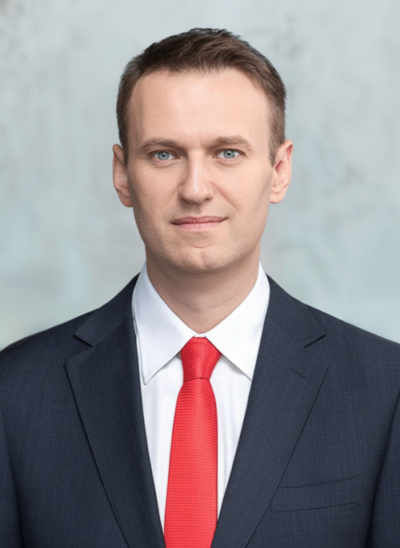
Alexei Navalny
Alexei Navalny was a Russian jurist and opposition leader. Born June 4, 1976, in Butyn. Died February 16, 2024, in FKU IK-3, Kharp. Positions held include Leader of Russia of the Future (2013–2021). Known for Putin's Palace, Don't Call Him Dimon and Anti-Corruption Foundation. Educated at Finance University under the Government of the Russian Federation and Yale University. Awards include Person of the Year, FP Top 100 Global Thinkers and Prize of the Platform of European Memory and Conscience.
Facts
60 facts · 2 confirmed by two sources · 39 cited · 19 from one source
Where this comes from
Papalocal keeps its own record. It started from these sources; what each one said is kept here as it was copied, so a change on their side never changes this page by itself. Tap one to read its version.
What Wikidata says · copied November 16, 2026 · revision 2568545500
- Described as
- Russian jurist and opposition leader (1976–2024)
- Other names
- Aleksey Navalnyy, Alexei Anatolyevich Navalny, Alexey Navalny, Aleksej Anatolʹevič Navalʹnyj
- Born
- June 4, 1976 · 4 references
- Died
- February 16, 2024 · 6 references
- Born in
- Butyn · 3 references
- Died in
- FKU IK-3, Kharp · 1 reference
- Buried in
- Borisovskoye Cemetery (2024) · 1 reference
- Citizen of
- Soviet Union (–1991); Russia (1991–) · 1 reference
- Occupation
- politician · 5 references; lawyer · 4 references; activist · 1 reference; blogger · 1 reference; public figure · 1 reference; activist shareholder · 1 reference; YouTuber; film director
- Positions held
- Leader of Russia of the Future (2013–2021) · 1 reference
- Political party
- Yabloko (2000–2007) · 1 reference; Progress Party (2013–2018) · 1 reference; Russia of the Future (2018–2024) · 1 reference
- Worked for
- Anti-Corruption Foundation; Aeroflot (2012–2013) · 2 references
- Education
- Finance University under the Government of the Russian Federation (1999–2001) · 1 reference; Yale University (2010) · 1 reference; Peoples' Friendship University of Russia (–1998) · 1 reference; Yale World Fellows
- Member of
- Russian Opposition Coordination Council (2012–2024); Yale World Fellows
- Known for
- Putin's Palace; Don't Call Him Dimon; Anti-Corruption Foundation
- Awards
- Person of the Year (2009) · 1 reference; FP Top 100 Global Thinkers (2011) · 1 reference; Prize of the Platform of European Memory and Conscience (2015) · 1 reference; Time 100 (2017) · 1 reference; Gold Play Button (2018) · 1 reference; Courage Award (2021) · 1 reference; Boris Nemtsov Prize (2021) · 1 reference; Knight of Freedom Award (2021) · 1 reference; Sakharov Prize (2021) · 2 references; M100 Media Award (2021) · 1 reference; The BOBs · 2 references; Silver Play Button (2016); Civil Courage Prize (2022) · 1 reference; Günter Walraff award (2023); Bambi Award (2023) · 1 reference
- Field
- politics · 1 reference; jurisprudence · 1 reference; political opposition · 1 reference; rights in politics · 1 reference; opposition to Vladimir Putin in Russia · 1 reference
- Spouse
- Yulia Navalnaya (2000–2024) · 1 reference
- Children
- Darya Navalnaya; Zakhar Navalny
- Father
- Anatoly Navalny · 1 reference
- Mother
- Lyudmila Navalnaya · 1 reference
- Siblings
- Oleg Navalny · 2 references
- Religion
- Eastern Orthodoxy · 1 reference
- Lived in
- Moscow (–2021) · 1 reference
- Height
- 1.89 m (6 ft 2 in) · 1 reference
- Website
- https://navalny.com
- Wikipedias with a page
- 133
Wikidata item Q155979 (wikidata.org/wiki/Q155979), public domain (CC0). Copied November 16, 2026.
What Wikipedia says · copied November 16, 2026 · revision 1382519832
Alexei Anatolyevich Navalny (Russian: Алексей Анатольевич Навальный, IPA: [ɐlʲɪkˈsʲej ɐnɐˈtolʲjɪvʲɪtɕ nɐˈvalʲnɨj]; 4 June 1976 – 16 February 2024) was a Russian opposition leader, anti-corruption activist and political prisoner. He founded the Anti-Corruption Foundation (FBK) in 2011. He was recognised by Amnesty International as a prisoner of conscience and was awarded the Sakharov Prize for his work on human rights.
Through his social media accounts, Navalny and his team published material about corruption in Russia, organised political demonstrations and promoted his campaigns. In a 2011 interview, he described Russia's ruling party, United Russia, as a "party of crooks and thieves", which became a popular byname. Navalny and the FBK have published investigations detailing alleged corruption by high-ranking Russian officials and their associates.
Navalny twice received a suspended sentence for embezzlement, in 2013 and 2014. Both criminal cases have been widely considered politically motivated and intended to bar him from running in future elections. He ran in the 2013 Moscow mayoral election and came in second with 27.2% of the vote, but was barred from running in the 2018 presidential election.
In August 2020, Navalny was hospitalised after being severely poisoned with a Novichok nerve agent. He was medically evacuated to Berlin and discharged a month later. He accused President Vladimir Putin of being responsible for his poisoning, and an investigation implicated agents from the Federal Security Service. In January 2021, Navalny returned to Russia and was immediately detained on accusations of violating parole conditions while hospitalised in Germany. Following his arrest, mass protests were held across Russia. The next month, Navalny's suspended sentence was replaced with a prison sentence of two years and eight months, and his organisations were later designated as extremist and liquidated. In March 2022, Navalny was sentenced to an additional nine years in prison after being found guilty of embezzlement and contempt of court in a new trial described as a sham by Amnesty International. Following the rejection of his appeal, Navalny was transferred to a high-security prison in June. In August 2023, he received another sentence of 19 years on extremism charges.
In December 2023, Navalny went missing from prison for almost three weeks. He re-emerged in an Arctic Circle corrective colony in the Yamalo-Nenets Autonomous Okrug. In 2024, the Russian prison service reported that Navalny had died.
- Born, in its opening lines
- June 4, 1976
- Died, in its opening lines
- February 16, 2024
From the Wikipedia article “Alexei Navalny” (en.wikipedia.org/wiki/Alexei_Navalny), by its contributors, under CC BY-SA 4.0 (creativecommons.org/licenses/by-sa/4.0/). Copied November 16, 2026; not changed.
Confirmed Two sources agree. Cited One source, and it names where it got it. One source One source, without a reference of its own. Sources disagree The sources disagree. We show the best-supported value and keep theirs below.
