
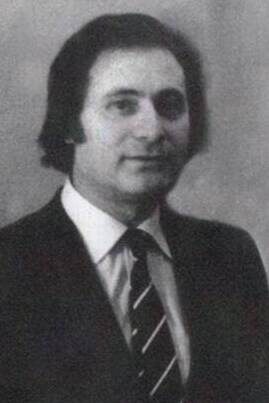
Alfred Schnittke
Alfred Schnittke was a Soviet-born Russian composer. Born November 24, 1934, in Engels. Died August 3, 1998, in Hamburg. Known for Symphony No. 0 and Symphony No. 9. Educated at Moscow Conservatory. Awards include Knight Commander's Cross of the Order of Merit of the Federal Republic of Germany, Bach Prize of the Free and Hanseatic City of Hamburg and Praemium Imperiale.
Facts
39 facts · 2 confirmed by two sources · 8 cited · 29 from one source
Where this comes from
Papalocal keeps its own record. It started from these sources; what each one said is kept here as it was copied, so a change on their side never changes this page by itself. Tap one to read its version.
What Wikidata says · copied November 16, 2026 · revision 2565556389
- Described as
- Soviet-born Russian composer (1934–1998)
- Other names
- Alfred Garrievich Schnittke, Alfred Garievich Shnitke, Alfred Schnitke, A. Shnitke, A. Shnittke, Alfred Schmittke, Arthur Schnittke, Alfres Schnittke
- Born
- November 24, 1934 · 10 references
- Died
- August 3, 1998 · 10 references
- Born in
- Engels · 2 references
- Died in
- Hamburg · 2 references
- Buried in
- Novodevichy Cemetery
- Cause of death
- stroke
- Citizen of
- Soviet Union; Russia · 1 reference
- Occupation
- composer · 2 references; pianist; music educator; university teacher; film score composer; musician · 1 reference
- Worked for
- Moscow Conservatory
- Education
- Moscow Conservatory
- Member of
- Academy of Arts of the GDR; Academy of Arts, Berlin; Bavarian Academy of Fine Arts
- Genre
- 20th-century classical music; opera; symphony; art music · 1 reference
- Instrument
- piano
- Record label
- ECM Records
- Known for
- Symphony No. 0; Symphony No. 9
- Awards
- Knight Commander's Cross of the Order of Merit of the Federal Republic of Germany; Bach Prize of the Free and Hanseatic City of Hamburg (1992); Praemium Imperiale (1992) · 1 reference; Honored art worker of the Russian Soviet Federative Socialist Republic; State Prize of the Russian Federation (1995) · 1 reference; Krupskaya State Prize of the RSFSR (1986) · 1 reference; Austrian Decoration for Science and Art (1995)
- Spouse
- Irina Schnittke (1961–) · 1 reference
- Children
- Andrej Schnittke
- Father
- Harry Schnittke
- Siblings
- Viktor Schnittke · 1 reference
- Website
- https://www.schnittke.org · 1 reference
- Wikipedias with a page
- 43
Wikidata item Q158078 (wikidata.org/wiki/Q158078), public domain (CC0). Copied November 16, 2026.
What Wikipedia says · copied November 16, 2026 · revision 1385084906
Alfred Garrievich Schnittke (24 November 1934 – 3 August 1998) was a Soviet-era Russian composer. Among the most performed and recorded composers of late 20th-century classical music, he is described by musicologist Ivan Moody as a "composer who was concerned in his music to depict the moral and spiritual struggles of contemporary man in [...] depth and detail."
Schnittke's early music shows the strong influence of Dmitri Shostakovich. He developed a polystylistic technique in works such as the epic Symphony No. 1 (1969–1972) and his first concerto grosso (1977). In the 1980s, Schnittke's music began to become more widely known abroad with the publication of his second (1980) and third (1983) string quartets and the String Trio (1985); the ballet Peer Gynt (1985–1987); the third (1981), fourth (1984), and fifth (1988) symphonies; and the viola concerto (1985) and first cello concerto (1985–1986). As his health deteriorated, Schnittke's music started to abandon much of the extroversion of his polystylism and retreated into a more withdrawn, bleak style.
- Born, in its opening lines
- November 24, 1934
- Died, in its opening lines
- August 3, 1998
From the Wikipedia article “Alfred Schnittke” (en.wikipedia.org/wiki/Alfred_Schnittke), by its contributors, under CC BY-SA 4.0 (creativecommons.org/licenses/by-sa/4.0/). Copied November 16, 2026; not changed.
Confirmed Two sources agree. Cited One source, and it names where it got it. One source One source, without a reference of its own. Sources disagree The sources disagree. We show the best-supported value and keep theirs below.
