
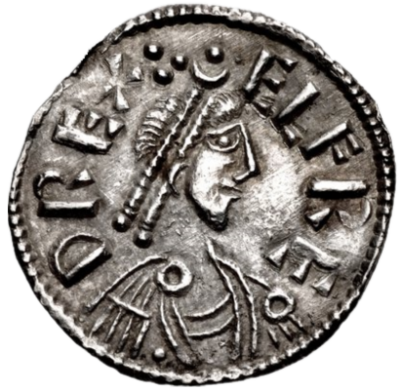
Alfred the Great
Alfred the Great was a king of Wessex (r. 872–901). Born 849, in Wantage. Died October 26, 899, in Winchester. Positions held include Monarch of England (871–899) and King of Wessex (871–899). Known for The pastoral care, The soliloquies and Psalms.
Facts
30 facts · 2 confirmed by two sources · 14 cited · 14 from one source
Where this comes from
Papalocal keeps its own record. It started from these sources; what each one said is kept here as it was copied, so a change on their side never changes this page by itself. Tap one to read its version.
What Wikidata says · copied November 16, 2026 · revision 2569091835
- Described as
- king of Wessex (r. 872–901)
- Other names
- Alfred, king of the Saxons, Aelfred the Great, Aelfred the Great, king of Wessex, Aelfred of Wessex, Alfred the Wise of England, Alfred of England, King Alfred of England, King Alfred the Wise, Alfred the Wise, Aelfred, King Aelfred of Wessex, King Aelfred the Great
- Born
- 849 · 5 references
- Died
- October 26, 899 · 1 reference
- Born in
- Wantage · 1 reference
- Died in
- Winchester
- Buried in
- Winchester
- Citizen of
- Kingdom of Wessex
- Occupation
- monarch; politician; writer · 1 reference
- Positions held
- Monarch of England (871–899); King of Wessex (871–899)
- Known for
- The pastoral care; The soliloquies; Psalms
- Spouse
- Ealhswith (868–899) · 2 references
- Children
- Æthelflæd · 2 references; Edward the Elder · 1 reference; Ælfthryth, Countess of Flanders · 1 reference; Æthelweard · 2 references; Æthelgifu · 2 references; Ælfthryth · 1 reference
- Father
- Æthelwulf · 2 references
- Mother
- Osburh · 1 reference
- Siblings
- Æthelswith · 1 reference; Æthelbald · 1 reference; Æthelberht · 1 reference; Æthelred I · 1 reference; Æthelstan of Kent; Æthelbald of Mercia · 1 reference
- Religion
- Christianity
- Wikipedias with a page
- 102
Wikidata item Q83476 (wikidata.org/wiki/Q83476), public domain (CC0). Copied November 16, 2026.
What Wikipedia says · copied November 16, 2026 · revision 1379500950
Alfred the Great (Old English: Ælfrǣd [ˈæɫvˌræːd]; c. 849 – 26 October 899) was King of the West Saxons from 871 to 886, and King of the Anglo-Saxons from 886 until his death in 899. He was the youngest son of King Æthelwulf and Æthelwulf's first wife Osburh, who both died when Alfred was young. Three of Alfred's brothers, Æthelbald, Æthelberht and Æthelred, reigned in turn before him. Under Alfred's rule, considerable administrative and military reforms were introduced, prompting lasting change in England.
After ascending the throne, Alfred spent several years fighting Viking invasions. He won a decisive victory at the Battle of Edington in 878 and made an agreement with the Vikings, dividing England between Anglo-Saxon territory and the Viking-ruled Danelaw, which consisted of Scandinavian York, the north-east Midlands, and East Anglia. Alfred also oversaw the conversion of the Viking leader Guthrum to Christianity. He defended his kingdom against the Viking attempt at conquest, becoming the dominant ruler in England. In 886 Alfred began styling himself "King of the Anglo-Saxons" after reoccupying London from the Vikings. Details of his life are described in a work by the 9th-century Welsh scholar and bishop Asser.
Alfred had a reputation as a learned and merciful man of a gracious and level-headed nature who encouraged education, establishing a court school for both nobles and commoners to be educated in both English and Latin, and improving the legal system and military structure and his people's quality of life. He was given the epithet "the Great" from as early as the 13th century, though it was only popularised from the 16th century. Alfred is the only native-born English monarch to be labelled as such.
- Born, in its opening lines
- c. 849
- Died, in its opening lines
- October 26, 899
From the Wikipedia article “Alfred the Great” (en.wikipedia.org/wiki/Alfred_the_Great), by its contributors, under CC BY-SA 4.0 (creativecommons.org/licenses/by-sa/4.0/). Copied November 16, 2026; not changed.
Confirmed Two sources agree. Cited One source, and it names where it got it. One source One source, without a reference of its own. Sources disagree The sources disagree. We show the best-supported value and keep theirs below.
