
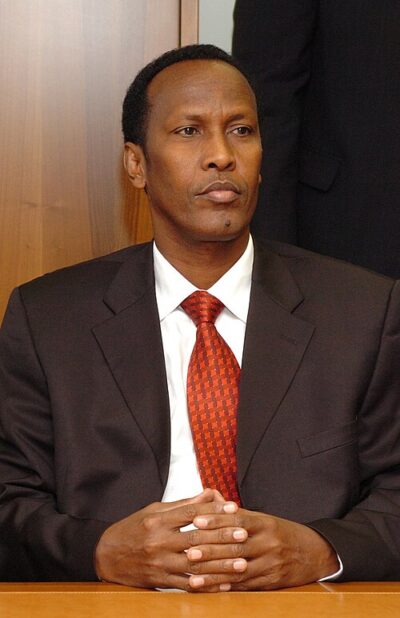
Ali Mohammed Ghedi
Ali Mohammed Ghedi is a Somali politician. Born October 2, 1952, in Mogadishu. Positions held include Prime Minister of Somalia (2004–2007). Educated at Mogadishu University and University of Pisa.
Facts
10 facts · 1 confirmed by two sources · 0 cited · 9 from one source
Where this comes from
Papalocal keeps its own record. It started from these sources; what each one said is kept here as it was copied, so a change on their side never changes this page by itself. Tap one to read its version.
What Wikidata says · copied November 18, 2026 · revision 2562789991
- Described as
- Somali politician
- Other names
- Ali Mohamed Gedi, Ali Mohammed Gedi
- Born
- October 2, 1952
- Born in
- Mogadishu
- Citizen of
- Somalia
- Occupation
- politician
- Positions held
- Prime Minister of Somalia (2004–2007)
- Political party
- Transitional Federal Government
- Worked for
- Somali National University
- Education
- Mogadishu University; University of Pisa · 1 reference
- Religion
- Islam
- Wikipedias with a page
- 23
Wikidata item Q355468 (wikidata.org/wiki/Q355468), public domain (CC0). Copied November 18, 2026.
What Wikipedia says · copied November 18, 2026 · revision 1384635478
Ali Mohammed Gedi (Somali: Cali Maxamed Geeddi, Arabic: علي محمد جيدي) (born 2 October 1952), popularly known as Ali Gedi, is a Somali politician who served as Prime Minister of the Transitional Federal Government (TFG) from 2004 to 2007.
A former academic and veterinary doctor based in Addis Ababa, Gedi was a little-known figure prior to his appointment in November 2004, the result of intensive lobbying by the Ethiopian government. Widely viewed as corrupt and an impediment to reconciliation, he resigned in October 2007 was replaced by Nur Hassan Hussein as PM.
- Born, in its opening lines
- October 2, 1952
From the Wikipedia article “Ali Mohammed Ghedi” (en.wikipedia.org/wiki/Ali_Mohammed_Ghedi), by its contributors, under CC BY-SA 4.0 (creativecommons.org/licenses/by-sa/4.0/). Copied November 18, 2026; not changed.
Confirmed Two sources agree. Cited One source, and it names where it got it. One source One source, without a reference of its own. Sources disagree The sources disagree. We show the best-supported value and keep theirs below.
