
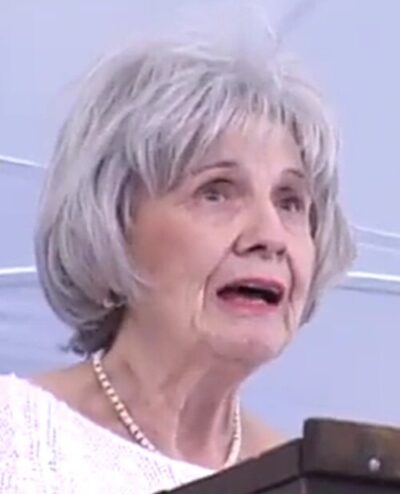
Alice Munro
Alice Munro was a Canadian writer. Born July 10, 1931, in Wingham. Died May 13, 2024, in Port Hope. Known for Too Much Happiness, Dear Life and Something I've Been Meaning to Tell You. Educated at University of Western Ontario. Awards include Nobel Prize in Literature, Order of Ontario and International Booker Prize.
Facts
39 facts · 2 confirmed by two sources · 21 cited · 16 from one source
Where this comes from
Papalocal keeps its own record. It started from these sources; what each one said is kept here as it was copied, so a change on their side never changes this page by itself. Tap one to read its version.
What Wikidata says · copied November 13, 2026 · revision 2566152136
- Described as
- Canadian writer (1931–2024)
- Other names
- Alice Ann Munro, Alice Ann Laidlaw Munro, Alice Laidlaw, Alice Anne Munro, Alice Ann Laidlaw
- Born
- July 10, 1931 · 7 references
- Died
- May 13, 2024 · 1 reference
- Born in
- Wingham · 3 references
- Died in
- Port Hope · 1 reference
- Name at birth
- Alice Ann Laidlaw · 1 reference
- Citizen of
- Canada · 4 references
- Occupation
- writer · 2 references; screenwriter · 1 reference; novelist · 1 reference; short story writer · 1 reference; journalist · 1 reference
- Education
- University of Western Ontario · 1 reference
- Member of
- American Academy of Arts and Sciences; Royal Society of Literature
- Known for
- Too Much Happiness; Dear Life; Something I've Been Meaning to Tell You
- Awards
- Nobel Prize in Literature (2013) · 1 reference; Order of Ontario (1994); International Booker Prize (2009) · 1 reference; Chevalier des Arts et des Lettres (2010) · 1 reference; National Book Critics Circle Award for Fiction (1998) · 1 reference; Marian Engel Award (1986) · 1 reference; WH Smith Literary Award (1995); PEN/Malamud Award (1997); Rea Award for the Short Story (2001) · 1 reference; O. Henry Award (2 times) (2006, 2008); Commonwealth Writers' Prize; Molson Prize (1990); Governor General's Award for English-language fiction (3 times) (1968, 1978, 1986); Fellow of the Royal Society of Literature (2002) · 2 references; Giller Prize (2 times) (1998, 2004)
- Field
- literary activity · 1 reference; prose · 1 reference; short story · 1 reference
- Spouse
- James Munro (1951–1972) · 1 reference; Gerald Fremlin (1976–2013)
- Children
- Sheila Munro · 1 reference
- Father
- Robert Laidlaw
- Wikipedias with a page
- 128
Wikidata item Q234819 (wikidata.org/wiki/Q234819), public domain (CC0). Copied November 13, 2026.
What Wikipedia says · copied November 13, 2026 · revision 1379082025
Alice Ann Munro ( mən-ROH; née Laidlaw; 10 July 1931 – 13 May 2024) was a Canadian short story writer who was awarded the Nobel Prize in Literature in 2013. Her work tends to move forward and backward in time, with integrated short story cycles.
Munro's fiction is most often set in her native Huron County in southwestern Ontario. Her stories explore human complexities in a simple but meticulous prose style. Munro received the Man Booker International Prize in 2009 for her life's work. She was also a three-time winner of Canada's Governor General's Award for Fiction, and received the Writers' Trust of Canada's 1996 Marian Engel Award and the 2004 Rogers Writers' Trust Fiction Prize for Runaway. She stopped writing around 2013 and died at her home in 2024.
Two months after Munro died, her daughter Andrea Skinner revealed that Munro's second husband, Gerald Fremlin, had sexually abused Skinner as a child starting in 1976. Munro learned of the abuse in 1992 and chose to stay with Fremlin. The news has led to some reevaluation of Munro's legacy.
- Born, in its opening lines
- July 10, 1931
- Died, in its opening lines
- May 13, 2024
From the Wikipedia article “Alice Munro” (en.wikipedia.org/wiki/Alice_Munro), by its contributors, under CC BY-SA 4.0 (creativecommons.org/licenses/by-sa/4.0/). Copied November 13, 2026; not changed.
Confirmed Two sources agree. Cited One source, and it names where it got it. One source One source, without a reference of its own. Sources disagree The sources disagree. We show the best-supported value and keep theirs below.
