
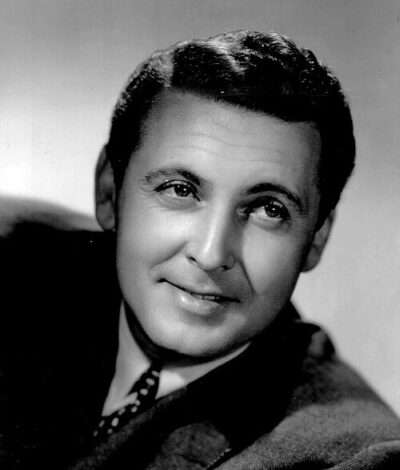
Allan Jones
Allan Jones was an American actor and tenor. Born October 14, 1907, in Old Forge. Died June 27, 1992, in New York City. Awards include star on Hollywood Walk of Fame.
Facts
17 facts · 2 confirmed by two sources · 4 cited · 11 from one source
Where this comes from
Papalocal keeps its own record. It started from these sources; what each one said is kept here as it was copied, so a change on their side never changes this page by itself. Tap one to read its version.
What Wikidata says · copied November 16, 2026 · revision 2569070875
- Described as
- American actor and tenor (1907-1992)
- Born
- October 14, 1907 · 5 references
- Died
- June 27, 1992 · 4 references
- Born in
- Old Forge · 1 reference
- Died in
- New York City · 1 reference
- Cause of death
- lung cancer
- Citizen of
- United States
- Occupation
- actor · 1 reference; singer; stage actor; film actor · 1 reference
- Instrument
- voice
- Awards
- star on Hollywood Walk of Fame · 1 reference
- Field
- acting · 1 reference; singing · 1 reference
- Spouse
- Irene Hervey (1936–1957); Mary Jones Bradley
- Children
- Jack Jones
- Wikipedias with a page
- 21
Wikidata item Q2837729 (wikidata.org/wiki/Q2837729), public domain (CC0). Copied November 16, 2026.
What Wikipedia says · copied November 16, 2026 · revision 1371002850
Allan Jones (October 14, 1907 – June 27, 1992) was an American tenor and actor.
Jones is probably best remembered today as the male romantic lead actor in the first two films the Marx Brothers starred in for Metro-Goldwyn-Mayer, A Night at the Opera (1935) and A Day at the Races (1937), as well as the film musicals Show Boat (1936) and The Firefly (1937), where he introduced "The Donkey Serenade", which became his signature song.
- Born, in its opening lines
- October 14, 1907
- Died, in its opening lines
- June 27, 1992
From the Wikipedia article “Allan Jones (actor)” (en.wikipedia.org/wiki/Allan_Jones_(actor)), by its contributors, under CC BY-SA 4.0 (creativecommons.org/licenses/by-sa/4.0/). Copied November 16, 2026; not changed.
Confirmed Two sources agree. Cited One source, and it names where it got it. One source One source, without a reference of its own. Sources disagree The sources disagree. We show the best-supported value and keep theirs below.
