
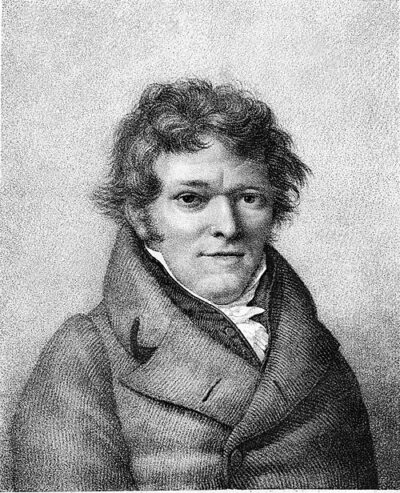
Alois Senefelder
Alois Senefelder was a German actor and inventor of lithography. Born November 6, 1771, in Prague. Died February 26, 1834, in Munich.
Facts
16 facts · 2 confirmed by two sources · 11 cited · 3 from one source
Where this comes from
Papalocal keeps its own record. It started from these sources; what each one said is kept here as it was copied, so a change on their side never changes this page by itself. Tap one to read its version.
What Wikidata says · copied November 16, 2026 · revision 2569239179
- Described as
- German actor and inventor of lithography (1771-1834)
- Other names
- Johann Nepomuk Franz Alois Senefelder, Aloys Senefelder, J N F Alois Senefelder, Johann Alois Senefelder
- Born
- November 6, 1771 · 13 references
- Died
- February 26, 1834 · 13 references
- Born in
- Prague · 4 references
- Died in
- Munich · 2 references
- Buried in
- Alter Südfriedhof
- Citizen of
- Kingdom of Bavaria
- Occupation
- inventor; lithographer · 1 reference; playwright · 1 reference; actor · 2 references
- Children
- Heinrich Senefelder · 1 reference
- Father
- Franz Peter Sennfelder · 1 reference
- Siblings
- Karl Senefelder · 1 reference; Clemens Senefelder · 1 reference; Theobald Senefelder · 1 reference; Georg Senefelder · 1 reference
- Wikipedias with a page
- 40
Wikidata item Q161048 (wikidata.org/wiki/Q161048), public domain (CC0). Copied November 16, 2026.
What Wikipedia says · copied November 16, 2026 · revision 1378010237
Johann Alois Senefelder (born Alois Johann Nepomuk Franz Senefelder; 6 November 1771 – 26 February 1834) was a German actor and playwright who invented the printing technique of lithography in the 1790s.
- Born, in its opening lines
- November 6, 1771
- Died, in its opening lines
- February 26, 1834
From the Wikipedia article “Alois Senefelder” (en.wikipedia.org/wiki/Alois_Senefelder), by its contributors, under CC BY-SA 4.0 (creativecommons.org/licenses/by-sa/4.0/). Copied November 16, 2026; not changed.
Confirmed Two sources agree. Cited One source, and it names where it got it. One source One source, without a reference of its own. Sources disagree The sources disagree. We show the best-supported value and keep theirs below.
