
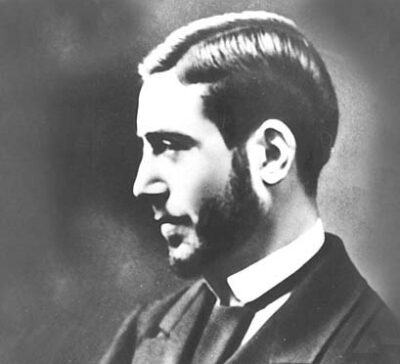
Alphonse Pénaud
Alphonse Pénaud was a French engineer. Born May 31, 1850, in Paris. Died October 22, 1880, in Paris. Educated at École Navale. Awards include Grand prix des sciences mathématiques.
Facts
11 facts · 2 confirmed by two sources · 2 cited · 7 from one source
Where this comes from
Papalocal keeps its own record. It started from these sources; what each one said is kept here as it was copied, so a change on their side never changes this page by itself. Tap one to read its version.
What Wikidata says · copied November 18, 2026 · revision 2522236191
- Described as
- French engineer (1850-1880)
- Other names
- Alphonse Penaud
- Born
- May 31, 1850 · 2 references
- Died
- October 22, 1880 · 3 references
- Born in
- Paris
- Died in
- Paris
- Citizen of
- France
- Occupation
- military flight engineer; mathematician; aerospace engineer · 1 reference
- Education
- École Navale
- Awards
- Grand prix des sciences mathématiques (1875)
- Field
- aviation · 1 reference
- Wikipedias with a page
- 21
Wikidata item Q919950 (wikidata.org/wiki/Q919950), public domain (CC0). Copied November 18, 2026.
What Wikipedia says · copied November 18, 2026 · revision 1362776207
Alphonse Pénaud (French pronunciation: [alfɔ̃s peno]; 31 May 1850 – 22 October 1880), was a 19th-century French pioneer of aviation design and engineering. He was the originator of the use of twisted rubber to power model aircraft, and his 1871 model airplane, which he called the Planophore, was the first aerodynamically stable flying model. He went on to design a full-sized aircraft with many advanced features, but was unable to get any support for the project, and eventually committed suicide in 1880, aged 30.
- Born, in its opening lines
- May 31, 1850
- Died, in its opening lines
- October 22, 1880
From the Wikipedia article “Alphonse Pénaud” (en.wikipedia.org/wiki/Alphonse_Pénaud), by its contributors, under CC BY-SA 4.0 (creativecommons.org/licenses/by-sa/4.0/). Copied November 18, 2026; not changed.
Confirmed Two sources agree. Cited One source, and it names where it got it. One source One source, without a reference of its own. Sources disagree The sources disagree. We show the best-supported value and keep theirs below.
